Last reviewed: August 5, 2026
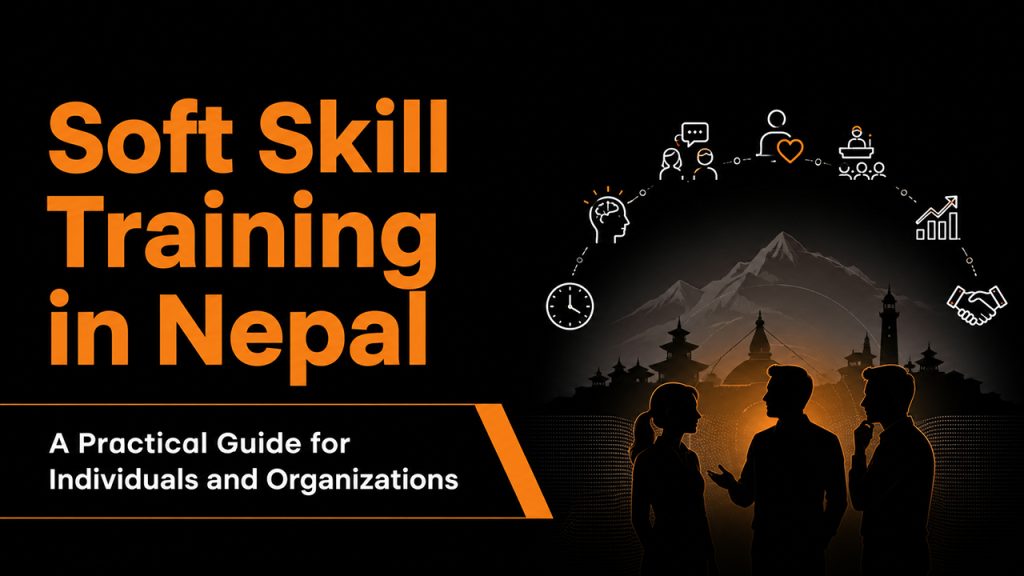
Soft skill training in Nepal helps students, employees, managers and business owners strengthen the human capabilities required to communicate, collaborate, solve problems, lead others and perform effectively at work. These capabilities include active listening, emotional intelligence, teamwork, adaptability, professional behaviour, critical thinking and conflict management.
Technical knowledge helps a person perform a specific task. Soft skills determine how effectively that knowledge is applied while working with customers, colleagues, managers and other stakeholders. This article explains which skills matter, what a practical course should cover, how to choose a soft skill trainer, training provider and how organizations can measure whether learning is applied after the program.
What Is Soft Skill Training?

Soft skill training is a structured process for developing interpersonal, behavioural, social, emotional and professional capabilities. It helps people improve how they communicate, respond to pressure, work with others, make decisions and adapt to different workplace situations.
Soft skills are sometimes described as interpersonal skills, employability skills, behavioural competencies, life skills or professional skills. These terms are related, although they are not always identical.
The OECD describes social and emotional skills as competencies that affect how people think, act and feel. Importantly, these abilities are not completely fixed. They can be cultivated over time through structured learning, reflection, practice and feedback. soft-skills program does more than explain concepts. Participants should have opportunities to:
- Practise realistic workplace situations
- Receive specific feedback
- Reflect on their current behaviour
- Apply tools to real problems
- Set personal action commitments
- Receive reinforcement after the session
For example, a communication workshop should not end after explaining active listening. Participants may need to practise listening to a customer concern, summarizing what they heard, asking a relevant follow-up question and receiving feedback on their response.
What Is the Difference Between Hard Skills and Soft Skills?

Hard skills are technical abilities required to perform particular tasks. Soft skills influence how a person uses those technical abilities while interacting, deciding, collaborating and responding to challenges.
| Hard skills | Soft skills |
|---|---|
| Usually specific to a job or function | Transferable across many roles |
| Accounting, coding, equipment operation or data analysis | Communication, teamwork, leadership and adaptability |
| Commonly assessed through tests or work samples | Commonly assessed through behaviour and performance |
| Explain what a person can technically do | Influence how effectively the person applies that knowledge |
| May change significantly by profession | Remain relevant across industries |
The two categories should not be treated as competitors. A technically skilled employee who cannot explain an idea, accept feedback or coordinate with colleagues may struggle to apply that expertise. Similarly, excellent communication without sufficient technical competence is not enough for a specialized role.
Professional performance generally requires both.
Why Is Soft Skill Training Important in Nepal?
Soft skill development is important in Nepal because qualifications alone may not prepare people for the interpersonal and behavioural requirements of modern workplaces.
The International Labour Organization reported in 2026 that Nepal continues to face labour-market challenges involving youth unemployment, underemployment, informal employment and skills mismatches. These issues have many economic and structural causes, and soft skill training is not a complete solution. However, better alignment between workforce capabilities and employer needs is an important part of improving employment services and labour-market outcomes. om academic knowledge to workplace performance
Students may understand a subject but still struggle to:
- Speak confidently during an interview
- Present an idea clearly
- Write a professional email
- Work with people from different backgrounds
- Receive corrective feedback
- Manage priorities
- Resolve misunderstandings
- Ask for clarification
Soft skill training helps convert knowledge into professional behaviour.
Competing in customer-focused industries
Banking, insurance, healthcare, education, hospitality, sales, technology, consulting and other service sectors depend heavily on human interaction.
Employees in these sectors frequently need to understand concerns, explain complex information, manage expectations and maintain trust. The quality of the conversation can influence customer experience as strongly as technical delivery.
Working across cultures and locations
Nepali professionals may work with people from different provinces, languages, cultures and countries. International employment, remote work, tourism, outsourcing and multinational organizations increase the need for clear and culturally aware communication.
Combining human judgment with technology
AI can assist with drafting, analysis, automation and information processing. It cannot remove the need for judgment, empathy, accountability, leadership and relationship-building.
The World Economic Forum’s Future of Jobs Report 2025 found that employers expect major changes in required workplace capabilities by 2030. Technology-related capabilities are growing quickly, but analytical thinking, resilience, flexibility, leadership and collaboration remain important core skills. conclusion is not “human skills versus AI.” It is human skills supported by technology.
What Are the Most Important Soft Skills?
The most valuable skill depends on the role, performance gap and working environment. A student preparing for an interview has different priorities from a manager leading a national sales team.
The following capabilities are broadly useful across Nepal’s employment and business sectors.
1. Communication skills
Communication includes speaking, listening, writing, questioning, explaining and confirming understanding.
Effective workplace communication means that the receiver understands the message well enough to take the correct next action. Speaking more does not necessarily mean communicating better.
Useful communication behaviours include:
- Listening without interrupting
- Asking open and clarifying questions
- Explaining ideas in simple language
- Organizing messages logically
- Adjusting tone to the situation
- Summarizing agreements
- Confirming responsibilities and deadlines
- Writing concise professional emails and messages
A customer-service employee may need empathy and clarity. A manager may need feedback and delegation skills. A salesperson may need discovery questions and value communication. The underlying skill is communication, but its application changes with the role.
2. Active listening
Active listening is the deliberate effort to understand another person’s words, concerns, intentions and emotions.
A person demonstrates listening by:
- Giving appropriate attention
- Avoiding premature conclusions
- Asking relevant follow-up questions
- Paraphrasing important points
- Confirming what has been understood
- Separating facts from assumptions
Listening is essential in customer conversations, team meetings, coaching, interviews, negotiations and conflict resolution.
3. Emotional intelligence
Emotional intelligence involves recognizing and managing one’s own emotions while responding appropriately to other people.
It includes:
- Self-awareness
- Emotional regulation
- Empathy
- Social awareness
- Relationship management
An emotionally intelligent employee does not ignore emotions. The employee recognizes how frustration, fear, pressure or excitement may affect judgment and communication.
In practice, emotional intelligence may help a salesperson manage rejection, a manager deliver difficult feedback and a customer-service employee respond calmly to an upset customer.
4. Teamwork and collaboration
Teamwork means contributing effectively toward a shared result. Collaboration involves coordinating knowledge, ideas, responsibilities and decisions across people or departments.
Strong team members:
- Share relevant information
- Complete agreed responsibilities
- Ask for support before a problem becomes critical
- Respect different viewpoints
- Give credit appropriately
- Address disagreement constructively
- Focus on the shared outcome
Team-building activities can create connection, but sustainable teamwork also requires clear roles, useful meetings, psychological safety, reliable communication and accountability.
5. Leadership
Leadership is the ability to influence direction, behaviour and performance toward a shared objective.
Leadership is not limited to senior positions. An employee may demonstrate leadership by taking ownership, supporting colleagues, raising a risk or improving a process.
Managers and supervisors need additional capabilities such as:
- Delegation
- Coaching
- Feedback
- Decision-making
- Performance conversations
- Conflict management
- Motivation
- Change leadership
- Accountability
Managers seeking deeper development can explore leadership training in Nepal.
6. Problem-solving
Problem-solving is the ability to identify a problem, understand its causes, evaluate options and implement an appropriate response.
A practical process is:
- Define the problem clearly.
- Separate evidence from assumptions.
- Identify possible causes.
- Evaluate available options.
- Select a response.
- assign responsibility.
- Review the result.
Soft skill training should use realistic problems rather than abstract puzzles alone. A hotel team may work on a guest complaint. A sales manager may analyse poor follow-up. A healthcare administrator may review communication between departments.
7. Critical thinking
Critical thinking is the disciplined evaluation of information before reaching a conclusion.
It involves asking:
- What do we know?
- What evidence supports it?
- What assumptions are we making?
- What information is missing?
- Is the source reliable?
- What alternative explanation exists?
- What may happen if we are wrong?
This capability has become increasingly relevant as employees use online information and AI-generated content. Fast access to an answer does not guarantee that the answer is accurate, suitable or ethical.
8. Adaptability and resilience
Adaptability is the ability to adjust behaviour, plans or methods when circumstances change. Resilience is the ability to recover and continue functioning after difficulty or disappointment.
These skills may help employees respond to:
- Changing customer expectations
- New technology
- Organizational restructuring
- New managers or teams
- Market uncertainty
- Unsuccessful proposals
- Increased responsibility
Resilience does not mean tolerating unhealthy systems indefinitely. Sometimes the appropriate response is to seek support, redesign a process or address the cause of pressure.
9. Time and priority management
Time management is not simply creating a longer task list. It involves deciding what deserves attention and organizing work accordingly.
Useful practices include:
- Clarifying outcomes
- Differentiating urgency from importance
- Planning demanding work during focused periods
- Reducing avoidable interruptions
- Grouping similar tasks
- Setting realistic deadlines
- Communicating delays early
- Reviewing unfinished work
An employee may need training in priority management, but persistent overload may be a staffing or process problem. Training should not be used to hide an unrealistic workload.
10. Conflict management
Conflict management is the ability to address disagreement without unnecessary personal attack, avoidance or escalation.
Constructive conflict management involves:
- Describing the issue specifically
- Listening to each perspective
- Separating the person from the problem
- Identifying common interests
- Agreeing on actions and boundaries
- Documenting important decisions
- Escalating serious matters appropriately
Not every disagreement needs compromise. Ethical, safety, legal or policy concerns may require formal escalation.
11. Negotiation and influencing
Negotiation is the process of reaching an agreement when parties have both shared and different interests.
Effective negotiation requires:
- Preparation
- Clear objectives
- Understanding the other party
- Value communication
- Questioning
- Trade-off planning
- Emotional control
- Closing and documentation
Influencing should not mean manipulation. Ethical influence helps people understand relevant information, consequences and value so they can make an informed decision.
12. Presentation and public speaking
Presentation skills help people organize and deliver information clearly to a group.
A good presentation normally requires:
- A defined audience
- A clear objective
- Logical structure
- Relevant evidence
- Simple visual support
- Confident but natural delivery
- Audience interaction
- A specific conclusion or next step
Confidence usually improves through preparation and repeated practice, not positive thinking alone.
13. Professional etiquette
Professional etiquette includes the behaviours that help create respectful and reliable working relationships.
Examples include:
- Punctuality
- Appropriate language
- Meeting preparation
- Respectful disagreement
- Responsible use of phones
- Professional email behaviour
- Confidentiality
- Suitable appearance for the role
- Respect for organizational policies
Etiquette can vary across industries and cultures. Training should explain the purpose behind expectations rather than enforcing superficial rules without context.
14. Customer-service skills
Customer service combines communication, empathy, product knowledge, problem-solving and follow-through.
Customers typically need:
- To feel heard
- To receive accurate information
- To understand the next step
- To know who is responsible
- To receive updates when delays occur
- To be treated respectfully
A polite greeting is useful, but service quality also depends on systems, authority, response time and coordination.
15. Career-readiness skills
Students and fresh graduates may particularly benefit from:
- Interview communication
- CV and application clarity
- Professional introductions
- Workplace expectations
- Email writing
- Presentation skills
- Team participation
- Feedback acceptance
- Personal goal setting
- Networking
Career-readiness training should use realistic interviews, workplace scenarios and feedback rather than lectures alone.
Who Needs Soft Skill Training in Nepal?
Soft skill training can benefit anyone whose performance depends on communication, decision-making, service, collaboration or leadership.
Students and fresh graduates
Training may support interview preparation, confidence, presentation, teamwork and transition into professional life.
Employees
Employees may benefit when their roles require cross-functional coordination, customer interaction, professional communication or independent problem-solving.
Sales and customer-service teams
These teams need active listening, empathy, questioning, objection handling, emotional regulation and follow-up discipline.
Managers and supervisors
Managers need to communicate expectations, delegate, coach, give feedback, resolve conflict and hold people accountable.
Entrepreneurs and founders
Entrepreneurs frequently need negotiation, networking, sales communication, decision-making, leadership and stakeholder management.
Teachers and academic professionals
Teachers use presentation, empathy, feedback, classroom communication, conflict management and collaboration.
Healthcare professionals
Healthcare depends on clear, respectful communication among patients, families and multidisciplinary teams. A focused guide to communication skills in healthcare explains sector-specific applications.
Organizations
Organizations may need training when recurring performance problems are connected with communication, customer handling, collaboration, leadership or accountability.
However, not every performance problem is a training problem.
What Does a Soft Skill Training Course Cover?
Course content should be based on the audience and the required behavioural outcome. A generic course may introduce several topics, while a customized program should concentrate on the few capabilities that matter most.
A comprehensive curriculum may cover:
- Self-awareness
- Communication
- Active listening
- Professional confidence
- Emotional intelligence
- Teamwork
- Leadership
- Time and priority management
- Problem-solving
- Conflict management
- Customer service
- Presentation skills
- Professional etiquette
- Action planning
What methods should be used?
Soft skills are behavioural. Participants need practice, not only information.
Useful methods include:
- Role-play
- Case analysis
- Group discussion
- Simulation
- Demonstration
- Self-assessment
- Peer observation
- Facilitator feedback
- Workplace assignments
- Reflection
- Action planning
For example, a conflict-management module may include a simulated conversation between a supervisor and an employee. Observers can score whether the supervisor described the issue clearly, listened, avoided personal accusations and agreed on a next action.
What Types of Soft Skill Training Are Available?
| Format | Best suited for | Main benefit | Main limitation |
|---|---|---|---|
| Open-enrolment workshop | Individuals from different organizations | Accessible and diverse peer learning | Limited customization |
| In-house training | One organization or department | Relevant examples and shared standards | Requires careful diagnosis |
| One-day workshop | Focused introduction or refresher | Efficient and practical | Limited time for behaviour change |
| Multi-session program | Complex capabilities | More practice and reinforcement | Requires greater commitment |
| Online live training | Distributed teams | Flexible location | Engagement must be actively managed |
| Self-paced course | Foundational knowledge | Flexible timing | Limited live feedback |
| Coaching | Managers or individual professionals | Personalized application | Less suitable for large groups |
| Train-the-trainer | Internal facilitators | Builds internal capability | Requires participant facilitation readiness |
| Blended program | Organizations needing transfer | Combines workshops, coaching and assignments | More coordination required |
The format should follow the objective. A two-hour awareness session may be suitable for introducing a concept. It is unlikely to be enough for a complex behavioural change requiring repeated practice.
Is Soft Skill Training Different From Motivational Training?
Yes. Soft skill training builds specific behaviours, while motivational training primarily addresses energy, mindset, confidence, resilience and willingness to act.
A motivational session may help when employees need renewed focus or confidence. Skills training is more suitable when people need to learn and practise a specific capability.
For example:
- Low energy may require motivation, leadership support or workload review.
- Weak feedback conversations may require manager training and practice.
- Poor customer follow-up may require a process, reminders and accountability.
- Weak presentation structure may require presentation-skills training.
- Low conversion may require diagnosis before selecting any intervention.
Mindset and skills can complement each other. Organizations exploring mindset-focused development can review motivational training in Nepal.
How Should an Organization Diagnose Its Training Needs?
A company should begin with the performance outcome, not a preferred training topic.
A practical SCOPE framework can support the decision:
S — Situation
What result or workplace situation needs improvement?
Examples:
- Customers receive inconsistent information.
- Managers avoid feedback conversations.
- Departments blame one another for delays.
- Employees struggle to present ideas.
- New recruits lack professional confidence.
C — Capability
Which knowledge, skill or judgment is required?
A customer complaint may involve listening, empathy, product knowledge, authority or process understanding. Identifying the wrong capability leads to the wrong program.
O — Observable behaviour
What should people do differently?
“Improve communication” is too broad. A clearer behaviour is:
Employees summarize the customer’s concern, confirm the expected solution and communicate the next step before ending the interaction.
P — Practice and performance support
How will people practise, and what support will exist after training?
Possible support includes:
- Role-play
- Manager coaching
- Checklists
- Meeting templates
- Job aids
- Peer review
- Refresher sessions
- Performance discussions
E — Evaluation
How will the organization know whether the capability improved?
Possible evidence includes:
- Observation
- Customer feedback
- Quality reviews
- Role-play scores
- Reduced misunderstandings
- Improved follow-up
- Better meeting effectiveness
- Manager assessment
Organizations can adapt ideas from a structured training-needs assessment to distinguish a skill problem from a process, system, workload or leadership problem.
Training decision principle: Do not use training to solve a problem caused mainly by unclear roles, inadequate staffing, poor tools, unsuitable incentives or missing authority.
Sample One-Day Soft Skill Training Curriculum
The following is an illustrative curriculum. It should be adjusted after assessing the participants and organizational need.
| Time | Module | Practical activity |
|---|---|---|
| 9:30–10:00 | Expectations and baseline | Self-assessment and learning goals |
| 10:00–11:00 | Clear workplace communication | Message-clarity exercise |
| 11:00–12:00 | Active listening and questioning | Paired listening role-play |
| 12:00–12:45 | Emotional intelligence | Trigger-and-response reflection |
| 12:45–1:30 | Lunch | — |
| 1:30–2:30 | Teamwork and accountability | Team problem-solving simulation |
| 2:30–3:30 | Conflict and feedback | Difficult-conversation role-play |
| 3:30–4:15 | Problem-solving | Workplace case analysis |
| 4:15–5:00 | Application planning | Individual action plan and manager support |
One day can create awareness, shared language and initial practice. More complex capabilities may require follow-up assignments, coaching and review.
What Are the Benefits of Soft Skill Training?
Benefits for students
Training can improve:
- Professional confidence
- Interview communication
- Presentation ability
- Team participation
- Career readiness
- Awareness of workplace expectations
Benefits for employees
Training may strengthen:
- Communication
- Relationship management
- Problem-solving
- Adaptability
- Conflict handling
- Professional reliability
Benefits for managers
Managers may become better able to:
- Set expectations
- Delegate
- Coach
- Give feedback
- Address underperformance
- Resolve conflict
- Lead change
Benefits for organizations
When training is relevant and reinforced, organizations may see:
- Clearer communication
- More consistent service
- Better collaboration
- Stronger supervisory capability
- Improved accountability
- Fewer avoidable misunderstandings
- Better customer conversations
These are possible outcomes, not automatic promises. Results depend on the starting situation, program design, facilitator quality, participant involvement, manager support and workplace systems.
What Are the Limitations of Soft Skill Training?
Training alone may not solve:
- Understaffing
- Unclear job roles
- Poor incentives
- Toxic leadership
- Missing tools
- Product or service problems
- Uncompetitive pricing
- Unrealistic targets
- Excessive workload
- Organizational policies that discourage communication
- Lack of decision-making authority
Another limitation is transfer. Participants may understand a concept in the classroom but return to a workplace that rewards the old behaviour.
A manager may attend coaching training, but application may remain weak if senior leaders never allow time for one-to-one conversations. A service employee may learn complaint handling but still fail customers if every solution requires several approvals.
For this reason, training design should include both individual capability and organizational support.
How Do You Choose the Best Soft Skill Training in Nepal?
The “best” provider is the one most suitable for the audience, objectives, industry and expected application.
Use the following checklist.
1. Does the provider assess the need?
Be cautious when a provider recommends a fixed topic before understanding the problem.
2. Are the learning outcomes behavioural?
“Participants will understand communication” is weak.
“Participants will use a structured listening and confirmation process during customer interactions” is more practical.
3. Is the content customized?
Examples should reflect the participants’ actual roles, customers and challenges.
4. Does the program include practice?
Soft skill development requires role-play, case analysis, simulation, feedback or workplace application.
5. Does the trainer have relevant experience?
Review the trainer’s professional background, subject knowledge, industries served and facilitation experience.
6. Is the methodology appropriate for adults?
Adult participants benefit from relevance, experience-sharing, problem-solving and immediate application.
7. How will learning be evaluated?
Ask whether evaluation goes beyond attendance and satisfaction.
8. Is follow-up available?
Follow-up may include coaching, refresher sessions, manager guides, assignments or progress reviews.
9. Are limitations explained honestly?
A credible provider should not guarantee permanent transformation from a single workshop.
10. Is there verifiable evidence?
Review real program descriptions, participant feedback, case material and training testimonials. Treat testimonials as one input, not the only basis for a decision.
How Much Does Soft Skill Training Cost in Nepal?
There is no single standard fee because the scope of each program can differ significantly.
Cost normally depends on:
- Program duration
- Number of participants
- Trainer or facilitator profile
- Open versus in-house delivery
- Customization
- Training-needs assessment
- Venue and equipment
- Travel outside Kathmandu Valley
- Learning materials
- Certificates
- Coaching or follow-up
- Residential requirements
- Reporting and evaluation
A low-cost workshop may be appropriate for basic awareness. A customized organizational program involving interviews, observation, tailored cases, delivery and follow-up will usually require more preparation.
Request a written proposal that separates:
- Objectives
- Participants
- Modules
- Methodology
- Duration
- Deliverables
- Responsibilities
- Follow-up
- Fees and taxes
Do not select a program solely because it is the cheapest or most expensive.
Can Soft Skill Training Be Delivered Outside Kathmandu?
Yes. Training can be delivered through in-house programs, regional workshops, online sessions or blended formats.
Kathmandu and Lalitpur provide convenient access to trainers and venues, but organizations may need programs in Pokhara, Chitwan, Butwal, Biratnagar, Dharan, Hetauda, Nepalgunj or other locations.
For teams outside Kathmandu Valley, planning should consider:
- Travel time
- Local language preferences
- Participant schedules
- Internet quality for online components
- Industry and regional context
- Venue suitability
- Follow-up arrangements
The location should support learning rather than determine the curriculum.
How Can Organizations Measure Training Effectiveness?
Training effectiveness should be measured at several levels.
| The Kirkpatrick framework organizes evaluation into reaction, learning, behaviour and results. It also emphasizes that workplace support and accountability influence whether participants apply what they learned. level | Main question | Possible measure |
|---|---|---|
| Reaction | Did participants find the program relevant and engaging? | Feedback survey and comments |
| Learning | What knowledge or capability improved? | Quiz, demonstration or role-play |
| Behaviour | Are participants applying the skill at work? | Observation, manager review or work samples |
| Results | Did the targeted organizational outcome improve? | Customer, quality, productivity or performance indicators |
Participant satisfaction matters, but it cannot prove behaviour change.
A highly rated workshop may still produce little application. A challenging workshop may create useful learning even when some participants find the practice uncomfortable.
Establish a baseline
Before training, document the current situation.
Possible baseline measures include:
- Customer complaint themes
- Communication quality scores
- Meeting effectiveness
- Role-play performance
- Manager observations
- Employee confidence assessments
- Response times
- Follow-up quality
- Team climate feedback
Define observable behaviours
Avoid measuring broad labels such as “better attitude.”
Measure behaviours such as:
- Summarizes the customer concern before responding
- Gives feedback using a specific example
- Ends meetings with owners and deadlines
- Asks open questions before recommending a solution
- Confirms understanding after giving instructions
Connect behaviour to a relevant result
Do not claim that training caused every change. Other factors may influence results.
Use cautious questions:
- Did the target behaviour increase?
- Did the relevant result move in the expected direction?
- What other changes occurred during the same period?
- Which parts of the program were applied?
- What barriers remain?
What Should Happen After the Training?
Learning transfer requires practice, feedback and reinforcement.
First 30 days
- Participants apply one or two behaviours.
- Managers observe and provide feedback.
- Teams use checklists or job aids.
- Participants discuss obstacles.
Days 31–60
- Conduct refresher practice.
- Review real workplace examples.
- Compare progress with the baseline.
- Coach employees who need additional support.
Days 61–90
- Review behaviour and business indicators.
- Identify which practices should become standard.
- Adjust systems that block application.
- Decide whether further training or coaching is required.
A long list of action points often creates weak implementation. Select a small number of important behaviours and reinforce them consistently.
What Common Mistakes Reduce Training Effectiveness?
Selecting a topic before identifying the problem
“We need communication training” may be correct, but the actual issue could be unclear roles, poor meeting structure or delayed information.
Covering too many skills
A one-day program cannot develop every capability in depth.
Using lectures for behavioural skills
Participants need to practise the behaviour.
Confusing entertainment with learning
Energy and humour can support engagement, but they should not replace objectives, practice and feedback.
Measuring only satisfaction
Enjoyment does not prove application.
Ignoring managers
Managers strongly influence whether employees use new skills.
Expecting immediate permanent change
Behaviour develops through repetition and reinforcement.
Focusing only on certificates
A certificate confirms participation or completion. It does not automatically confirm competence.
Treating every participant identically
Managers, graduates, salespeople and service employees need different examples and levels of complexity.
Are Soft Skills Still Important in the Age of AI?
Yes. AI changes how work is completed, but it also increases the importance of capabilities used to evaluate, explain and apply technology responsibly.
Professionals still need to:
- Ask the right question
- Verify information
- Interpret context
- Exercise judgment
- Explain recommendations
- Manage disagreement
- Understand human concerns
- Take responsibility for decisions
- Collaborate across functions
- Lead change
The World Economic Forum identifies analytical thinking as a leading core skill and also highlights resilience, flexibility, leadership and social influence. Technology literacy and human skills therefore need to develop together. knows how to use AI but cannot verify an output or communicate its limitations creates risk. A strong communicator who refuses to learn new tools may also fall behind.
The future workplace needs both.
Key Takeaways
- Soft skills influence how technical knowledge is applied.
- The right skills depend on the role and performance gap.
- Communication, emotional intelligence, teamwork, adaptability, leadership and problem-solving are widely relevant.
- Behavioural skills require practice and feedback.
- Training should begin with diagnosis.
- Not every performance problem can be solved through training.
- One workshop may create awareness, but reinforcement supports application.
- Organizations should measure learning, behaviour and relevant results.
- AI makes human judgment and collaboration more not less important.
- A suitable provider should customize the program and explain limitations honestly.
Take the Next Step
Before arranging a workshop, identify the situations where performance is breaking down and the behaviours employees need to demonstrate more consistently.
Organizations can explore customized corporate development services or discuss their training needs with Soft Skill Trainer in Nepal Diwakar Rijal. The initial discussion should determine whether training, coaching, process improvement or a combined approach is most suitable.
Assess the specific communication, leadership, customer-service or collaboration gaps affecting your team. Then discuss your organization’s training needs to determine whether training, coaching, process improvement or a combined intervention is appropriate.
Frequently Asked Questions About Soft Skill Training in Nepal
What is soft skill training?
Soft skill training develops interpersonal, behavioural, social and professional capabilities such as communication, teamwork, leadership, emotional intelligence, problem-solving and adaptability. Effective training combines explanation with realistic practice, feedback and workplace application.
Why is soft skill training important in Nepal?
It helps bridge the gap between academic or technical knowledge and the behaviour required in professional settings. Nepal’s labour market also faces skills mismatches, underemployment and changing employer expectations, making career readiness and workplace capability important areas of development.
What are the most important soft skills for a job in Nepal?
Communication, active listening, teamwork, problem-solving, adaptability, emotional intelligence, time management and professional behaviour are widely relevant. The priority depends on the job. A manager may need coaching and delegation, while a customer-facing employee may need empathy and complaint handling.
What is the difference between hard skills and soft skills?
Hard skills are technical abilities such as accounting, programming or equipment operation. Soft skills influence how a person communicates, collaborates, decides and adapts while applying technical knowledge. Most professional roles require both categories.
Can soft skills be learned?
Yes. Social, emotional and behavioural capabilities can be strengthened through reflection, guided practice, feedback and repeated application. Improvement normally requires more than listening to a lecture because participants must practise the relevant behaviour.
Who should attend soft skill training?
Students, jobseekers, employees, managers, entrepreneurs, teachers, healthcare professionals, sales teams and customer-service staff may benefit. The program should be matched to the participants’ roles and real performance needs.
What topics are covered in a soft skill training course?
Common topics include communication, active listening, emotional intelligence, teamwork, leadership, conflict management, problem-solving, time management, presentation, customer service and professional etiquette. A customized course should prioritize only the capabilities relevant to the audience.
How long does soft skill training take?
Programs may range from a few hours to several months. A short workshop can introduce concepts and provide initial practice. Complex behavioural development normally benefits from multiple sessions, workplace assignments, coaching or follow-up.
How much does soft skill training cost in Nepal?
Fees depend on duration, participants, trainer profile, customization, venue, travel, materials, assessment and follow-up. Organizations should request a proposal describing the objectives, methodology, deliverables and total cost rather than comparing fees without comparing scope.
Is online soft skill training effective?
Live online training can be effective when it includes interaction, practice, feedback, breakout activities and follow-up. Recorded lessons may support foundational knowledge but provide fewer opportunities for observation and personalized feedback.
Does soft skill training provide a certificate?
Many programs provide participation or completion certificates. However, a certificate does not automatically demonstrate competence. Learners should also consider the quality of practice, feedback, assessment and workplace application.
What is corporate soft skill training?
Corporate soft skill training is a program designed around an organization’s employees, roles, customers and performance needs. It may cover communication, leadership, teamwork, customer service, accountability or other behavioural capabilities.
Can a program be customized for one organization?
Yes. A customized program can use the organization’s terminology, cases, customer situations and performance standards. It should begin with a needs assessment rather than simply changing the company logo on generic slides.
How do I choose a soft skill training provider in Nepal?
Evaluate the provider’s relevant experience, diagnostic process, learning outcomes, facilitation methodology, customization, practice activities, feedback process and follow-up. Review authentic evidence, but avoid selecting a provider solely through promotional claims.
Is motivational training the same as soft skill training?
No. Motivational training primarily addresses mindset, energy, confidence and willingness to act. Soft skill training develops specific behaviours such as listening, feedback, negotiation or conflict management. Some programs combine both when the need justifies it.
Is soft skill training useful for fresh graduates?
Yes. Fresh graduates may benefit from interview communication, presentation, teamwork, professional etiquette, feedback acceptance and workplace expectations. Training is most useful when it includes realistic interview and workplace simulations.
Which soft skills are important for managers?
Managers need communication, delegation, coaching, feedback, emotional intelligence, conflict management, decision-making and accountability. They must also create conditions that help team members apply their skills.
Can soft skills be measured?
Yes, although measurement should focus on observable behaviour rather than vague personality labels. Organizations can use role-plays, work samples, manager observations, customer feedback, pre- and post-assessments and relevant performance indicators.
How can companies measure the return from training?
Companies should establish a baseline, define the expected behaviour and connect it with a relevant business result. Evaluation can consider participant reaction, learning, workplace application and organizational outcomes while accounting for other factors that may influence performance.
Are soft skills important when employees use AI?
Yes. AI increases the need for critical thinking, verification, judgment, communication, collaboration and accountability. Employees must understand when an AI-generated output is useful, incomplete, unsuitable or potentially inaccurate.
Can one workshop permanently change employee behaviour?
Usually not by itself. One workshop can build awareness, provide tools and begin practice. Sustainable application generally requires manager support, repetition, feedback, suitable systems and accountability after the session.
About the Author and Soft Skill Trainer in Nepal
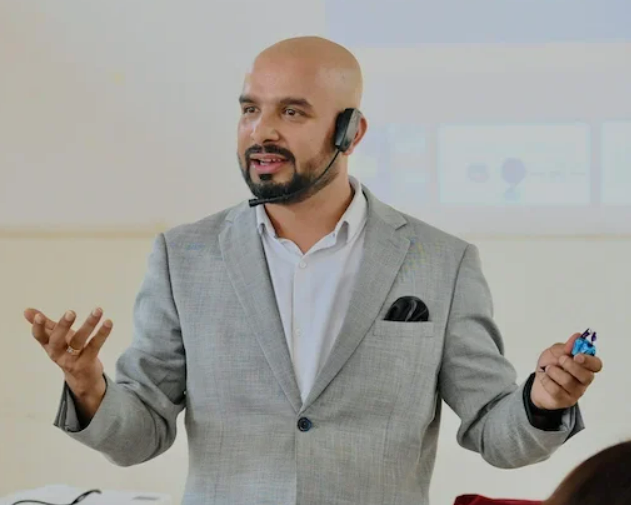
Diwakar Rijal is a Nepal based sales trainer, leadership trainer, motivational speaker and workplace-performance professional. His work focuses on practical capability development, emotional intelligence, sales execution, leadership improvement and customized corporate training.
Learn more about Diwakar Rijal.