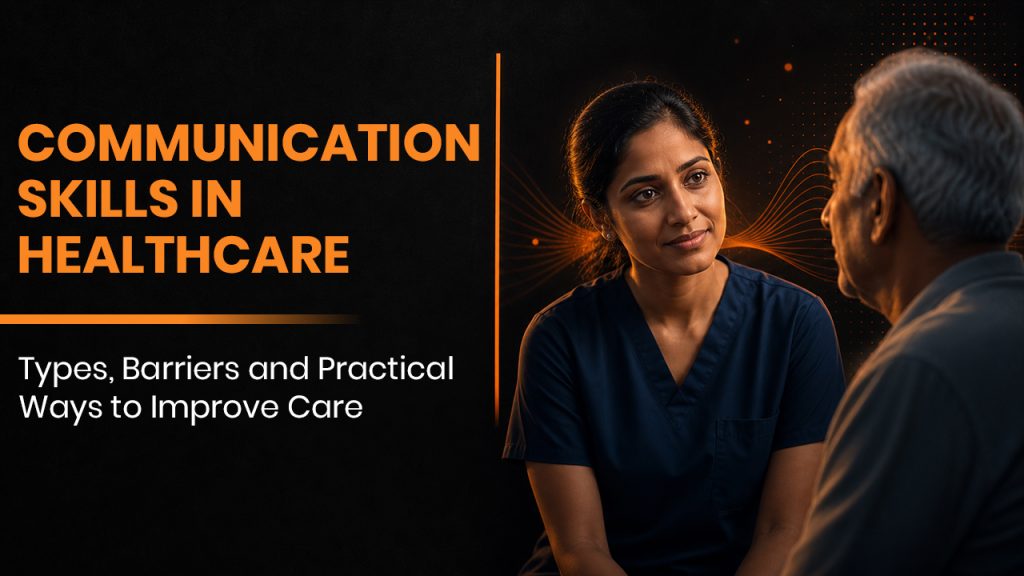
Communication skills in healthcare influence how patients understand their health concerns, treatment instructions, follow-up plans, and care decisions. They also shape teamwork among doctors, nurses, pharmacists, technicians, administrators, and caregivers.
Effective healthcare communication is not simply about speaking clearly. It involves active listening, empathy, appropriate body language, plain language, respectful cultural awareness, accurate documentation, and checking whether the patient or team member has truly understood the message.
In healthcare settings, one unclear instruction, rushed handover, misunderstood medicine schedule, or ignored concern can create confusion. Strong healthcare communication skills help reduce these risks by creating shared understanding between patients, families, and healthcare teams.
What Are Communication Skills in Healthcare?
Communication skills in healthcare are the abilities professionals use to exchange information, understand concerns, explain decisions, build trust, and coordinate care.
These skills apply during patient consultations, emergency care, medicine counselling, discharge discussions, referrals, handovers, team meetings, telemedicine calls, and written documentation.
A healthcare professional may have strong clinical knowledge, but patients may still feel confused if the explanation is rushed, highly technical, or emotionally disconnected. Similarly, a well-meaning team can face avoidable delays when critical information is incomplete during a shift handover.
The goal is not to make every conversation long. The goal is to make every important conversation clear, respectful, accurate, and appropriate to the person receiving the message.
The World Health Organization estimates that around one in ten patients experiences harm while receiving healthcare. Communication is not the only reason for unsafe care, but it is an essential part of patient safety, teamwork, and quality improvement.
Why Do Communication Skills Matter in Healthcare?
Healthcare is a people centred service. Patients are often anxious, in pain, uncertain, or afraid when they seek care. They may not understand medical language, may hesitate to ask questions, or may rely on family members for support.
Clear communication helps patients understand what is happening and what they need to do next.
It also helps healthcare workers identify symptoms correctly, understand patient concerns, reduce avoidable misunderstandings, and coordinate effectively with colleagues.
AHRQ’s patient safety resources highlight structured approaches such as SBAR, closed-loop communication, check-backs, teach-back, and standardised handovers as practical tools for safer teamwork and clearer information exchange.
Evidence Snapshot: Communication and Patient Care
| Area | Evidence or Insight | Practical Meaning |
|---|---|---|
| Patient safety | WHO estimates around 1 in 10 patients experience harm during healthcare. | Reliable communication should be part of safety systems. |
| Team communication | Communication failures are commonly identified in serious healthcare incidents. | Teams need clear handovers, confirmation, and escalation systems. |
| Language barriers | Research shows language barriers can reduce understanding, satisfaction, and communication quality. | Plain language and appropriate interpreter support matter. |
| Teamwork training | AHRQ cites an obstetric setting where preventable adverse events decreased from 13.5% to 8.83% after teamwork-focused communication training. | Training can support measurable improvement when combined with systems and leadership support. |
The figures above should not be treated as a promise that one training session will produce the same outcome everywhere. Every hospital, clinic, and healthcare team has different staffing, workflow, leadership, and patient needs.
What Are the Main Types of Communication in Healthcare?
Healthcare professionals use multiple communication channels every day. Each one needs a different level of attention and skill.
| Type of Communication | What It Includes | Common Example |
|---|---|---|
| Verbal communication | Spoken words, tone, pace, clarity, accent, and voice modulation | Explaining a diagnosis or treatment plan |
| Non-verbal communication | Body language, eye contact, facial expression, posture, gestures, appearance | Sitting attentively while listening to a patient |
| Written communication | Medical records, prescriptions, referral notes, discharge summaries, emails | Writing clear discharge instructions |
| Electronic communication | Telemedicine, electronic health records, messaging apps, digital reminders | Video consultation or digital report sharing |
Verbal Communication
Verbal communication includes the words used during conversations with patients, relatives, and colleagues.
However, communication is not only about words. Tone of voice, speed, pauses, volume, and the way a message is delivered can change its meaning.
For example, saying “You need to take this medicine regularly” may sound simple. But a patient may still need to know when to take it, how long to take it, what to do if a dose is missed, and when to return for follow-up.
Non-Verbal Communication
Non-verbal communication often speaks before words do.
A healthcare professional may say, “Please tell me what you are worried about,” but if they are looking at a phone, standing near the door, or appearing rushed, the patient may not feel safe enough to speak openly.
A useful memory tool for non-verbal communication is PEOPLE:
- P – Posture and Gestures: Are you open, calm, and approachable?
- E – Eye Contact: Are you maintaining respectful and appropriate attention?
- O – Orientation: Are you positioned in a way that shows engagement?
- P – Presentation: Is your communication style professional and clear?
- L – Looks: Is your appearance suitable for the healthcare setting?
- E – Expressions of Emotion: Do your facial expressions match your message?
Written Communication
Written communication needs accuracy, clarity, and completeness.
A prescription, discharge note, referral letter, or medical record may be read by patients, family members, pharmacists, nurses, or other doctors. Unclear abbreviations, incomplete instructions, and poor handwriting can create unnecessary confusion.
Healthcare workers should avoid assuming that everyone will understand technical terms. Important information should be written in a clear, organised, and easy-to-follow format.
Electronic Communication
Electronic communication includes electronic health records, telemedicine platforms, emails, digital reports, appointment reminders, and secure messaging systems.
Technology can improve access and speed. However, it can also create misunderstandings when tone is unclear, messages are incomplete, or patients have limited digital literacy.
A short message such as “Report normal, follow up later” may not answer the patient’s real concern. A better message would explain the next step clearly and mention when or why follow-up is needed.
What Are the Core Communication Skills in Healthcare?
1. Active Listening
Active listening means giving full attention to the speaker without rushing, interrupting, or becoming distracted.
In a patient consultation, active listening helps professionals understand symptoms, emotions, concerns, expectations, and practical barriers to care.
Useful active-listening behaviours include nodding, maintaining appropriate eye contact, summarising key points, and saying phrases such as:
- “Let me make sure I understood you correctly.”
- “You mentioned that the pain becomes worse at night.”
- “What concerns you the most about this situation?”
Listening is not passive. It is a deliberate effort to understand what the other person is saying and what they may be hesitant to say.
2. Empathy
Empathy means recognising another person’s feelings and responding with care and respect.
A patient may feel fear after hearing an unfamiliar diagnosis. A family member may feel overwhelmed by treatment decisions. A junior healthcare worker may feel nervous about raising a safety concern.
Empathy does not mean giving false reassurance. It means acknowledging emotions honestly and respectfully.
Simple phrases can make a major difference:
- “I understand this information may feel overwhelming.”
- “It is understandable to have questions.”
- “Let us go through this step by step.”
3. Concise and Clear Verbal Communication
Clear communication means using language that matches the listener’s level of understanding.
Avoid complex medical jargon unless it is explained. Instead of using highly technical words immediately, explain the idea in simple language first and then provide the medical term when appropriate.
For example, instead of only saying “hypertension,” explain that it means high blood pressure. Instead of saying “adherence,” explain that it means taking treatment as agreed.
Clear communication also means avoiding unnecessary details at the wrong time. Patients often remember important information better when it is delivered in small, organised sections.
4. Effective Non-Verbal Communication
Patients notice facial expressions, posture, gestures, eye contact, and tone.
A calm tone can reduce anxiety. Sitting at the patient’s level can feel more respectful than speaking while standing over them. A warm facial expression can make it easier for people to ask questions.
At the same time, non-verbal communication must be culturally sensitive. Eye contact, physical distance, gestures, and touch may have different meanings for different individuals and communities.
5. Asking Open-Ended Questions
Open-ended questions encourage people to share more than “yes” or “no” answers.
Examples include:
- “What brings you here today?”
- “How has this problem affected your daily life?”
- “What have you understood about the treatment plan?”
- “What questions do you still have?”
These questions can reveal concerns that may not appear through closed questions alone.
Closed questions are still useful when clarification is needed. For example, “Have you taken this medicine today?” may be necessary after an open conversation.
6. Building Rapport
Rapport is the feeling of trust, comfort, and mutual respect between people.
Healthcare professionals can build rapport by introducing themselves, explaining their role, using the patient’s preferred name, maintaining privacy, and avoiding judgemental language.
Rapport is especially important when discussing sensitive concerns such as mental health, reproductive health, addiction, chronic illness, cancer, or family-related issues.
Trust helps patients share accurate information. Without trust, patients may hide symptoms, skip questions, or avoid future care.
7. Constructive Feedback and Confirmation
Constructive feedback focuses on behaviour, actions, and improvement rather than blame or personality.
For healthcare teams, feedback should be specific, respectful, and timely. Instead of saying, “You are careless,” a team leader can say, “The handover did not include the latest medicine change. Let us use a structured format next time.”
Confirmation is equally important. A message is not complete simply because it was spoken.
Teach-back and check-back methods can be useful:
- “Can you explain how you will take this medicine when you return home?”
- “Please repeat the dose and timing back to me.”
- “To confirm, the patient will be transferred after the test result is reviewed.”
8. Patience
Patients and families may need time to process information, especially during emotionally difficult conversations.
Rushing can create confusion, fear, or silence. Patients may appear to understand even when they do not.
Patience means allowing time for questions, pauses, reflection, and response. It also means avoiding distractions such as checking a phone, interrupting repeatedly, or speaking while walking away.
9. Cultural Sensitivity
Cultural sensitivity means recognising that people may have different beliefs, communication styles, family structures, language preferences, and expectations about care.
Some patients may prefer family involvement in decision-making. Others may want private discussions. Some may hesitate to disagree with a doctor or ask questions because of hierarchy, age, or social norms.
Respectful communication does not require assumptions. It requires asking, listening, and adapting appropriately.
What Are the Major Barriers to Communication in Healthcare?
Communication barriers can occur at the individual, team, organisational, cultural, and technological levels.
| Barrier | What It May Look Like | Practical Response |
|---|---|---|
| Physical barriers | Noise, lack of privacy, distance, poor internet connection | Move to a quieter space, reduce distractions, confirm key details |
| Psychological barriers | Stress, anxiety, fear, embarrassment, bias | Use calm language, empathy, privacy, and time |
| Language barriers | Different languages, accents, medical jargon | Use plain language and appropriate interpreter support |
| Cultural barriers | Different beliefs, values, family roles, body-language meanings | Ask respectful questions and avoid assumptions |
| Organisational barriers | Hierarchy, silos, unclear reporting systems | Use structured handovers and encourage speaking up |
| Interpersonal barriers | Distrust, conflict, poor listening, defensive behaviour | Build rapport and use constructive feedback |
| Technological barriers | Digital divide, unclear emails, over-reliance on apps | Give simple instructions and confirm understanding |
| Semantic barriers | Ambiguous terms, complex language, unclear abbreviations | Use simple words and define important terms |
Physical Barriers
Noise, overcrowding, interruptions, poor lighting, lack of privacy, and technical failures can reduce communication quality.
A patient discussing a sensitive concern at a crowded reception area may not feel comfortable sharing essential details. A poorly connected telemedicine consultation may lead to missed information.
Psychological Barriers
Stress, fear, anxiety, fatigue, anger, and embarrassment can affect how people speak, listen, and understand.
A patient who fears a diagnosis may hear only part of the explanation. A busy healthcare worker under pressure may become impatient or overly brief without realising the effect on the patient.
Language Barriers
Language barriers can make healthcare communication difficult for both patients and professionals.
A systematic review found that language barriers can lead to miscommunication and lower satisfaction for both healthcare professionals and patients.
Whenever possible, healthcare settings should use clear language, visual aids, translated materials, and qualified interpreter support according to organisational policies.
Cultural Barriers
Cultural differences can influence eye contact, gestures, privacy expectations, decision-making, family involvement, gender preferences, and beliefs about illness.
Cultural sensitivity is not about memorising every tradition. It is about asking respectful questions and staying open to different perspectives.
Organisational Barriers
Rigid hierarchies, departmental silos, unclear channels, and poor escalation systems can stop important information from reaching the right person.
For example, a junior nurse may notice a concern but may hesitate to speak up. A structured safety culture gives every team member permission to raise concerns respectfully.
Technological and Semantic Barriers
Digital communication can be fast but can lose tone, context, and emotion.
A short email, unclear WhatsApp message, or incomplete electronic record can be misinterpreted. Technical jargon and abbreviations can create semantic barriers when different people understand the same word differently.
How Can Healthcare Professionals Improve Communication?
Use Plain Language First
Explain health information in everyday words before using technical terms.
Break complex information into smaller parts. Avoid giving too many instructions at once. Use examples, visual aids, or written summaries where useful.
Start With the Patient’s Concern
Before explaining everything, ask what the patient wants to understand.
A simple question such as, “What worries you most today?” can help healthcare professionals focus on the issue that matters most to the patient.
Use Teach-Back
Teach-back is a respectful way to check whether an explanation was clear.
Instead of asking, “Do you understand?” ask:
“I want to make sure I explained this clearly. Can you tell me how you will follow this plan at home?”
This approach checks the quality of the explanation, not the intelligence of the patient.
Use Structured Team Communication
For handovers, referrals, urgent updates, and critical situations, structured tools can reduce confusion.
SBAR is one commonly used format:
- Situation: What is happening now?
- Background: What relevant history is needed?
- Assessment: What do you think is happening?
- Recommendation: What action or support is needed?
AHRQ’s TeamSTEPPS framework also includes closed-loop communication, check-backs, teach-back, and structured handoffs.
Confirm the Next Step
Every important interaction should end with clarity.
Patients and team members should know:
- What happens next
- Who is responsible
- When follow-up is needed
- What warning signs or questions require attention
- How to contact the appropriate person or department
A Simple CLEAR Framework for Patient Conversations
The following is a practical learning framework, not a replacement for clinical protocols.
C – Connect
Introduce yourself, ensure privacy when possible, and create a respectful environment.
L – Listen
Begin with an open question. Allow the patient or family member to describe their concern without immediate interruption.
E – Explain
Use plain language, short sentences, and relevant examples. Avoid overwhelming the listener with too much information at once.
A – Ask Back
Use teach-back to check whether your explanation was clear.
R – Review Next Steps
Confirm the follow-up plan, responsibilities, contact pathway, and key instructions.
This framework can be useful during consultations, discharge discussions, medicine counselling, and difficult conversations.
How Can Healthcare Teams Build Better Communication Skills?
Communication improves when organisations treat it as a daily practice rather than a one-time training topic.
A practical communication development process may include:
- Observing current conversations and handovers
- Identifying common communication gaps
- Practising real-life scenarios through role plays
- Giving specific feedback
- Creating simple communication standards
- Reviewing progress through patient feedback and team reflection
For managers, communication is closely connected with leadership, accountability, feedback, conflict management, and psychological safety. Teams that want to strengthen these areas can explore Leadership Training in Nepal.
Customer-facing professionals can also benefit from practical Sales Training in Nepal, especially where trust-building, needs analysis, active listening, and value communication are important.
For organisations seeking mindset, motivation, and workplace engagement support, Motivational Training in Nepal can complement skills-based learning.
For a customised workplace communication or leadership-development discussion, organisations can contact Diwakar Rijal.
Frequently Asked Questions
What are communication skills in healthcare?
Communication skills in healthcare are the abilities used to listen, explain, document, respond, and coordinate effectively with patients, families, and healthcare teams.
What are the four types of communication in healthcare?
The four main types are verbal communication, non-verbal communication, written communication, and electronic communication.
What is an example of effective communication in healthcare?
A doctor explaining a treatment plan in simple language, asking the patient to repeat the key instructions, and confirming the follow-up date is an example of effective communication.
What are common barriers to communication in healthcare?
Common barriers include language differences, medical jargon, stress, lack of privacy, cultural differences, poor listening, hierarchy, technical problems, and unclear documentation.
Why is active listening important in healthcare?
Active listening helps healthcare professionals understand symptoms, concerns, expectations, and emotions more accurately. It also helps patients feel heard and respected.
Why does non-verbal communication matter in healthcare?
Body language, facial expressions, posture, eye contact, and tone can influence whether patients feel safe, respected, and comfortable sharing information.
How can healthcare workers improve patient communication?
Healthcare workers can improve communication by using plain language, asking open-ended questions, showing empathy, avoiding distractions, using teach-back, and confirming the next step.
Is communication training only useful for healthcare workers?
No. Communication training is valuable for managers, sales teams, educators, customer-service professionals, leaders, and any team that depends on trust, collaboration, and clear decision-making.
Final Takeaway
Effective communication in healthcare means more than giving information. It means creating shared understanding.
The strongest healthcare conversations combine active listening, empathy, clarity, appropriate non-verbal communication, cultural sensitivity, and confirmation of next steps. When patients understand their care plan and teams communicate reliably, trust and coordination become stronger.
Author Bio
Written by Diwakar Rijal
Diwakar Rijal is a Nepal based sales trainer, leadership trainer, and workplace performance professional with more than 20 years of experience supporting teams through practical training, communication development, leadership improvement, and performance-focused systems. Learn more about Diwakar Rijal.
Editorial note: This article is educational and should complement not replace clinical guidelines, hospital policies, professional standards, or advice from licensed healthcare authorities.