
In sales, many people focus too much on pitching and too little on the two moments that shape the entire outcome: the opening and the closing.
A sale rarely fails because the product is weak. More often, it fails because the conversation begins badly, loses direction, or ends without a clear next step.
Whether you sell services, insurance, banking solutions, real estate, education, technology, or consumer products, one truth remains constant: the way you start and the way you finish a conversation determine your results.

For professionals and organizations looking for stronger performance, this is exactly why sales training in Nepal is becoming more important than ever. Teams need more than product knowledge. They need structure, confidence, communication skills, and the ability to guide a customer from interest to action.
How to Open and Close a Sale ?
In this article, I want to break down the practical principles of opening and closing a sale in a way that is simple, applicable, and powerful for the Nepali business environment. If you are a business owner, team leader, entrepreneur, or someone searching for a trusted sales trainer in Nepal, this guide will help you understand what truly works in real sales conversations.
Why Opening and Closing Matter So Much in Sales
Many salespeople think the middle part of the discussion is everything. They prepare product features, pricing, brochures, and offers. But customers often decide how much attention to give you in the first few moments.
That first impression is shaped by:
- your greeting
- your body language
- your confidence
- your tone of voice
- your clarity of purpose
And at the end of the conversation, the customer is not asking, “Did this person speak a lot?” The real question is: “What happens next?”
That is the purpose of closing.
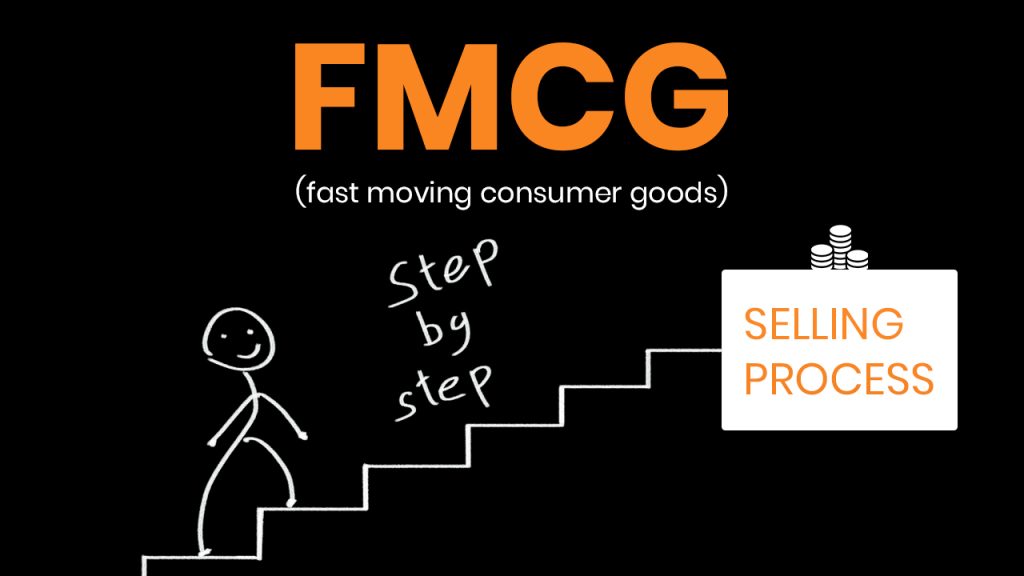
A professional sales conversation should not feel random. It should move through a clear path:
- Greeting and introduction
- Opening with purpose
- Understanding the customer
- Presenting value
- Handling concerns
- Closing with a commitment
This is the difference between casual talking and intentional selling.
A Good Sale Begins Before You Speak
One of the most overlooked truths in selling is this: a great opening is planned, not improvised.
Too many people begin a customer conversation without deciding:
- what the objective of the call or meeting is
- what key words they want to use
- what outcome they want at the end
- how much time they need from the customer
If you go into a sales conversation without a plan, you will start speaking, then searching for words, then losing confidence.
Preparation creates confidence.
Before any customer meeting or sales call, ask yourself:
- What is my objective?
- What do I want the customer to understand?
- What is the next step I want them to agree to?
- What words will I use in the first 10–15 seconds?
The best salespeople do not “wing it.” They prepare short, clear opening lines that communicate purpose and value immediately.
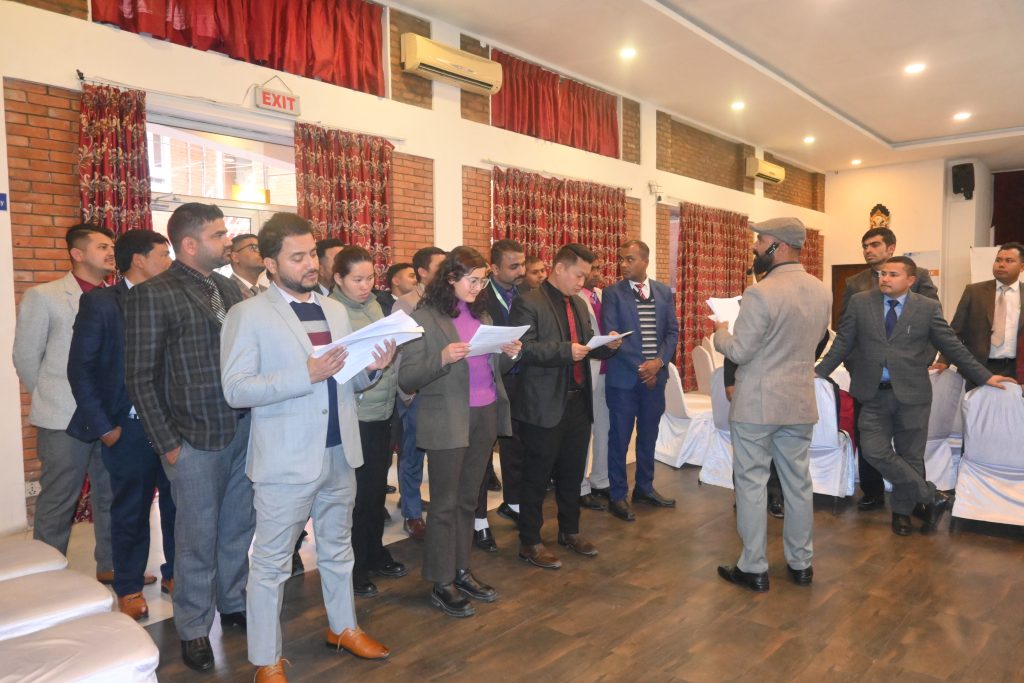
This is one of the core areas covered in high-impact sales training in Nepal, because structured communication changes results quickly.
The Four Foundations of a Strong Sales Greeting
Before you open the sale, you open the relationship. Your greeting matters more than many people realize.
A powerful greeting is built on four things:
1. Eye Contact
Eye contact should be confident, natural, and respectful. It should not feel aggressive or uncomfortable. Good eye contact signals attentiveness and presence. Poor eye contact can suggest nervousness, low confidence, or lack of sincerity.
2. A Genuine Smile
A real smile builds warmth. It reduces tension. It tells the customer you are approachable. In contrast, a dull or forced expression can make the interaction feel mechanical.
3. A Respectful Nod
A gentle nod can communicate respect and openness. It is a small detail, but in relationship-based cultures like Nepal, small details often influence trust.
4. A Professional Handshake or Greeting Style
Where appropriate, your greeting style should feel balanced and respectful. It should not be too dominating, too weak, or too casual. In some contexts, a namaste, smile, or slight nod may be more culturally appropriate than a handshake.
Sales is not just verbal communication. It is also physical communication.
If your body language says “I am unsure,” your words will struggle to create confidence.
That is why organizations often work with a sales trainer in Nepal or a motivational speaker in Nepal who can coach teams not just on what to say, but how to show confidence through presence, posture, and voice.

How to Introduce Yourself the Right Way
A poor introduction is self-centered. A strong introduction is customer-centered.
Many salespeople introduce themselves by talking about their company in a way the customer does not care about. But customers are not mainly interested in who employs you. They are interested in what value you bring.
A strong introduction should answer three questions:
Who are you?
State your name clearly and simply.
What brand or business do you represent?
Mention the brand in a way that is recognizable and relevant.
What benefit are you bringing?
This is the most important part. What can you offer that matters to the customer?
Instead of sounding like you are simply “checking in,” your introduction should quickly connect to customer benefit.
For example, a weak opening sounds like this:
“Hello, I am calling from our company to tell you about our services.”
A stronger opening sounds like this:
“Good morning, this is Diwakar Rijal. I help teams improve sales performance, customer communication, and closing skills.”
Notice the difference. The second one creates meaning immediately.
In practical sales training in Nepal, this kind of introduction practice is essential because many sales teams lose attention in the first few seconds by being vague, overly formal, or too company-focused.
Opening the Sale: State the Purpose Clearly
Once the greeting and introduction are done, it is time to open the sale properly.
Opening the sale means telling the customer:
- why you are speaking to them
- what the agenda is
- what outcome you are working toward
A sales opening should be clear, brief, and purposeful.
A good opening line often works best when it is crisp and direct. Not long. Not confusing. Not overloaded.
For example:
- “I’d like to understand your current sales challenges and share a practical solution.”
- “I’m here to understand your training needs and show how we can improve team performance.”
- “I’d like 10 minutes to discuss how your team can close more confidently.”
These types of openings work because they give direction.
Customers feel more comfortable when they know:
- why you are there
- what you want to discuss
- how much of their time you need
This reduces resistance.

For Diwakar Rijal’s personal brand, this is especially important. When people search for a sales trainer of Nepal, they are not just looking for a theory. They are looking for someone who can help professionals speak with clarity, authority, and trust.
Always Respect the Customer’s Time
One of the strongest habits in selling is asking for time respectfully.
After your opening, it is wise to request a small, clear commitment such as:
- “Is this a good time to speak for 10 minutes?”
- “May I take 5 minutes to understand your requirements?”
- “Would now be a good time, or should we schedule another slot?”
This matters for two reasons.
First, it shows respect.
Second, it creates psychological permission.
When a customer agrees to give time, the conversation becomes more cooperative.
Respecting time also helps you prioritize the meeting. If the customer says they only have five minutes, you know you must focus on the essentials.
Sales professionals who master this are perceived as more professional, mature, and trustworthy.
Every Sales Call Must Have an Objective
A call without an objective becomes a conversation without direction.
Before any meeting or phone call, define your sales objective clearly. This could be:
- fix a second meeting
- qualify the customer
- present a proposal
- get product trial approval
- book a demo
- ask for a site visit
- get commitment for review or follow-up
Many people confuse activities with objectives.
For example:
- “explaining product features” is an activity
- “getting agreement for a demo” is an objective
This difference is huge.
When your objective is clear, your questions, examples, and closing become sharper.
This is why advanced sales training in Nepal focuses not only on communication but also on call planning. Performance improves when salespeople stop “just talking” and start moving with purpose.

How to Open a Sales Call on the Phone
Phone sales require even more care because the customer cannot see your body language. That means your voice carries more responsibility.
In a phone call, your structure should usually include:
1. Greeting
Start with a polite, professional greeting.
2. Confirming the person
Make sure you are speaking to the right person.
3. Introduction
State your name and who you represent.
4. Purpose
Explain the reason for your call.
5. Time request
Ask whether this is a suitable time to continue.
A poor phone opening often sounds abrupt and salesy.
A better phone opening sounds calm, relevant, and respectful.
For example:
“Good afternoon, am I speaking with Mr. Sharma? This is Diwakar Rijal. I’m calling to understand whether your team is currently exploring sales capability building. Is this a good time for a brief conversation?”
This works because it is clear, respectful, and not pushy.
For telesales teams, banking teams, insurance advisors, education counselors, and B2B consultants, this phone structure can dramatically improve engagement.
Watch for Closing Signals
Closing should not feel forced. It should happen when the customer shows readiness.
Many salespeople miss the right moment because they keep talking even after the customer is showing interest.
Common closing signals include:
- the customer agrees with your points
- the customer asks detailed questions
- the customer asks about implementation, timing, or price
- the customer suggests a possible next step
- the customer starts imagining ownership or usage
- the customer says they will review, visit, test, or discuss internally
These are not signs to continue pitching endlessly. These are signs to guide the conversation toward commitment.
A skilled salesperson listens for these moments.
That is one of the big differences between average and high-performing professionals.
What Closing Really Means
Many people misunderstand closing. They think closing means forcing the customer to say yes immediately.
That is not professional selling.
Closing actually means moving the conversation to the next agreed step.
A close is successful when there is a clear commitment from both sides.
You may commit to:
- sending a proposal
- arranging a demo
- visiting their office
- sharing a training outline
- following up at a fixed time
The customer may commit to:
- attending the next meeting
- reviewing the proposal
- involving decision-makers
- visiting a site
- giving feedback by a certain date
This is a healthier and more practical view of closing.
In many real sales situations, especially in consultative selling, the first close is not the final purchase. It is the next step in the buying journey.
That is why the best closings are specific, mutual, and measurable.
Use Commitment-Based Closing
A strong close usually has two parts:
1. What you will do next
State your action clearly.
2. What you want the customer to do next
Ask for a specific commitment.
For example:
- “I’ll send you the proposal today. Could you review it by Thursday so we can discuss it on Friday?”
- “I can meet your team and walk them through the framework. Would Wednesday at 3 PM work?”
- “I’ll prepare a customized training outline. Could you share your team size and priority challenges by tomorrow?”
This kind of close is effective because it is concrete.
Avoid vague endings such as:
- “Let’s stay in touch.”
- “I’ll call you sometime.”
- “Think about it and let me know.”
Those are not closings. They are escapes.
A professional close always defines the next step.
This is where a seasoned corporate sales trainer in Nepal can make a major difference for teams. Many salespeople know how to present, but not how to ask for a commitment confidently.
If the Customer Resists, Revise the Closing
Not every closing attempt will work in the first format. That is normal.
If the customer resists because of time, distance, scheduling, or internal approval, revise the closing instead of abandoning it.
For example:
- If they cannot attend a meeting, offer a short virtual call.
- If they cannot decide now, ask for a review date.
- If they are too busy, reduce the next step to something smaller.
- If they want to involve others, ask who should join the next discussion.
This is a key sales lesson: when one close does not work, adjust the path, not the objective.
Flexibility improves conversions.
Summarize Before Ending the Conversation
Before ending a sales call or meeting, summarize the agreed points.
This is a powerful habit because it:
- confirms mutual understanding
- prevents confusion
- strengthens commitment
- makes the next step real
A simple summary sounds like this:
“Great. So today we discussed your team’s need for stronger opening and closing skills. I’ll send a customized training proposal by tomorrow, and you’ll review it with your management team before our call on Friday.”
That short summary improves professionalism instantly.
It gives clarity, confidence, and momentum.
Sales in Nepal: Why These Skills Matter More Than Ever
Nepal’s business environment is changing. Competition is growing across sectors. Customers are more informed. Attention spans are shorter. Trust matters deeply. Communication quality is now a competitive advantage.
This is why more companies are investing in sales training in Nepal. They understand that better communication creates better conversions, stronger customer experience, and long-term business growth.
Today’s sales professional must be able to:
- make a confident first impression
- communicate value quickly
- ask better questions
- respect customer time
- recognize buying signals
- close with clarity
And beyond techniques, teams also need mindset, motivation, and consistency. That is why the role of a motivational speaker in Nepal who also understands performance, leadership, and practical selling has become increasingly valuable.
Professionals do not just need inspiration. They need applicable frameworks they can use the very next day.
FAQs
What is the most important part of opening a sale?
The most important part is clarity. A strong opening tells the customer who you are, why you are speaking, and what value you bring.
What does closing a sale really mean?
Closing means moving the customer to a clear next step through mutual commitment. It is not always the final purchase; sometimes it is the next agreed action.
Why is sales training important for businesses in Nepal?
Sales training helps teams improve confidence, communication, objection handling, customer engagement, and conversion rates in a competitive market.
Who can help companies with sales training in Nepal?
An experienced sales trainer in Nepal can help teams build the practical skills required to open, handle, and close sales conversations effectively.
Is motivational speaking useful for sales teams?
Yes. A practical motivational speaker in Nepal can boost mindset, confidence, discipline, and performance when the session is connected to real workplace application.
Final Thoughts
Opening and closing are not minor parts of sales. They are the moments that frame the entire conversation.
A strong opening creates trust.
A clear objective creates direction.
A respectful time request creates cooperation.
A commitment-based closing creates movement.
If you want better sales results, do not only train your team to present products. Train them to start well and finish well.
That is how real sales performance is built.
For organizations, business owners, and teams that want practical improvement, coaching from an experienced sales trainer in Nepal can help transform everyday conversations into measurable business outcomes. And for audiences looking for energizing, relevant, and actionable sessions, learning from a results-driven motivational speaker in Nepal can create lasting impact beyond temporary excitement.
In today’s market, selling is not about pressure. It is about preparation, presence, purpose, and progress.
Open with confidence.
Close with clarity.
And let every conversation move one step closer to trust, value, and action.
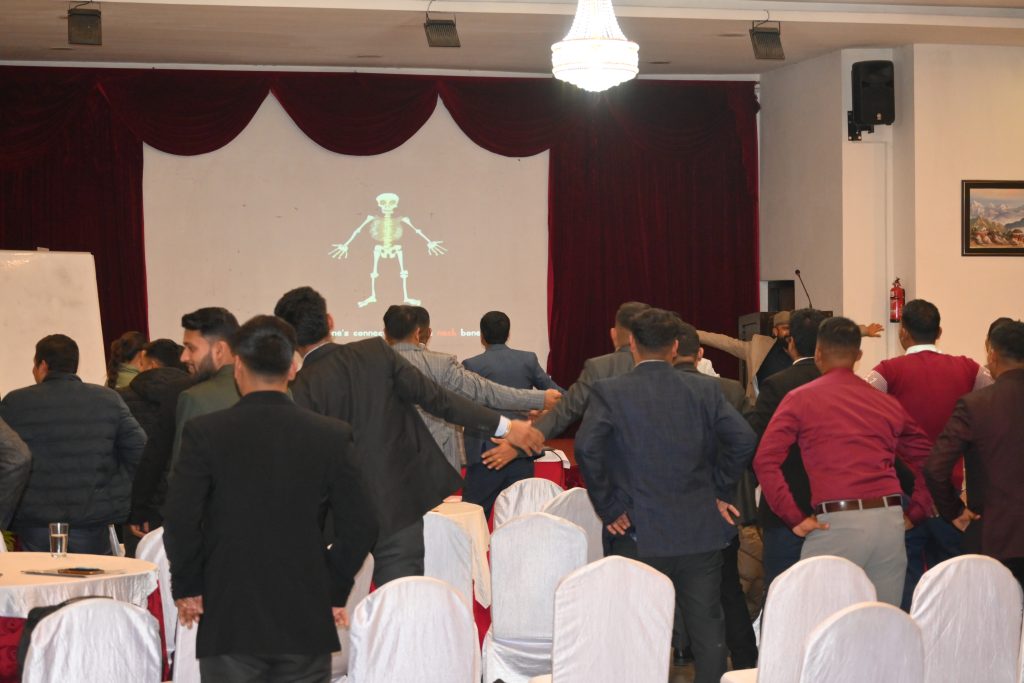
Looking to improve your team’s sales communication, customer handling, and closing skills?
Diwakar Rijal provides practical sales training in Nepal for organizations, entrepreneurs, and professionals who want real-world results. If you are searching for a trusted sales trainer of Nepal, or a dynamic motivational speaker in Nepal for your next program, this is the right time to start the conversation.
Official Website: Diwakar Rijal : Sales Trainer in Nepal
Training & Consulting Services: BaAma Consultant Official Site
Contact Numbers: +977 980-1013376, +977 9849101980
Location: Gwarko, Lalitpur, Nepal