
Business Consultant in Nepal for Strategy, Sales & Sustainable Growth
Looking for a business consultant in Nepal who can help you identify what is actually limiting business performance and turn strategy into practical action?
I work with entrepreneurs, business owners, SMEs, managers and growing organizations to improve business strategy, sales, business development, leadership, customer development, execution systems and performance accountability.
Business growth rarely depends on one isolated solution. A sales problem may actually be a positioning problem. A productivity problem may be a management problem. A scaling problem may be caused by founder dependency, unclear processes or weak accountability.
My approach begins by understanding the business before recommending the intervention: diagnose the real problem, identify priorities, develop practical solutions and translate strategy into measurable action.
Discuss Your Business Challenge Explore Consulting Services
What Does a Business Consultant in Nepal Do?
A business consultant helps an organization understand important business problems, evaluate opportunities, improve decision-making and develop practical strategies for stronger performance.
The consultant's role depends on the organization. One company may need a clearer growth strategy. Another may need a predictable sales process. A founder-led company may require stronger delegation and management systems, while an established organization may need better accountability, customer strategy or execution discipline.
That is why effective business consulting in Nepal should not begin with a predefined solution. It should begin with diagnosis.
- What is the business trying to achieve?
- What is preventing the organization from reaching that goal?
- Which problems are symptoms and which are root causes?
- Where are customers, opportunities or revenue being lost?
- Does the business have a structured sales process?
- Are managers and employees aligned around priorities?
- Which opportunities deserve management attention first?
- What should the company stop, start or improve?
- How will management know whether changes are working?
The value of a consultant is not simply an outside opinion. The value comes from helping management create clarity, priorities, systems, better decisions and practical action.
Why Growing Businesses in Nepal Seek Consulting Support
Many businesses in Nepal are built through entrepreneurship, relationships, personal networks, market knowledge and the energy of the founder. These strengths can help a company establish itself, but the systems required to start a business are not always the systems required to scale a business.
Consider a founder who personally generates most of the company's sales. That may work extremely well while the business is small. As the company grows, however, continued dependence on one person can become a bottleneck.
The organization may eventually need trained salespeople, lead qualification, pipeline visibility, documented processes, account management, stronger managers, clear responsibilities and measurable KPIs.
Similarly, increasing marketing activity may not solve weak sales if leads are poorly qualified, follow-up is inconsistent or the value proposition is unclear.
A business advisor in Nepal can provide useful external perspective when management is too close to the problem, when growth creates new complexity or when the business knows change is necessary but has not identified the correct priority.
Common Business Problems Consulting Can Help Diagnose
Growth Has Slowed
Revenue has plateaued, existing approaches are producing diminishing results or management is uncertain where the next stage of growth should come from.
Sales Are Inconsistent
Results depend too heavily on individual salespeople, personal networks, referrals or the founder rather than a structured and measurable process.
Strategy Is Not Being Executed
Management has plans and targets, but priorities are not consistently translated into ownership, deadlines, activities and performance reviews.
The Founder Has Become a Bottleneck
Too many decisions, relationships and activities continue to depend on one person, making sustainable growth more difficult.
Teams Lack Accountability
Responsibilities are unclear, performance conversations are irregular or managers cannot clearly connect activities with business results.
Marketing and Sales Are Disconnected
Marketing generates activity, but management cannot clearly connect it with qualified opportunities, conversion, revenue or customer development.
Business Consulting Services in Nepal
My business consulting services in Nepal focus on the areas where strategy, customers, revenue, leadership, people and execution connect.
The exact scope depends on the business challenge rather than forcing every company into the same consulting package.
1. Business Strategy and Strategic Planning
A strong business strategy helps management decide where to focus limited resources: time, people, capital and leadership attention.
As a business strategy consultant, I help management examine the gap between where the organization wants to go and what is currently happening in the market, sales function and internal business system.

Business strategy consulting may examine your current business model, target customers, market position, competitive advantage, strategic priorities, organizational capabilities, growth barriers and opportunities.
The goal is to establish clarity around:
- Where the organization is today
- Where management wants the business to go
- Which customers and markets deserve priority
- What makes the business meaningfully different
- What is preventing progress
- Which initiatives should come first
- What should not consume resources right now
- How execution and progress will be measured
Strategic planning becomes useful only when it influences real decisions. The objective is therefore not simply to produce a strategy document. It is to create a direction the organization can execute.
2. Business Growth Consulting
Sustainable business growth is more complex than increasing sales targets.
Growth depends on whether the organization can identify opportunities, acquire appropriate customers, convert demand into revenue, retain customers, develop people and repeat successful processes.
As a business growth consultant in Nepal, I help organizations examine where realistic growth can come from and what needs to change internally to capture that opportunity.
Potential areas include:
- New customer segments
- Existing-customer growth
- Market expansion
- Distribution and channel development
- Strategic partnerships
- Improved conversion
- Customer retention
- Account development
- New products or service opportunities
- Sales productivity
- Positioning and value proposition
The objective is not to pursue every possible opportunity. It is to identify opportunities that fit the company's resources, capabilities and strategic direction.
3. Sales Strategy and Business Development Consulting
Sales is where business strategy meets the market.
A company may have a strong product and significant market potential yet struggle to grow because its sales system depends on individual relationships, inconsistent prospecting or irregular follow-up.
Sales and business development consulting may examine:
- Ideal customer profiles
- Target-account selection
- Lead generation
- Prospecting
- Opportunity qualification
- Customer discovery
- Value proposition
- Sales messaging
- Proposal strategy
- Objection handling
- Negotiation
- Closing
- Follow-up discipline
- Pipeline management
- Account development
- Customer retention
- Sales management
- Performance reviews
Where the sales system is clear but employees need stronger selling capability, consulting can be combined with structured sales training in Nepal.
4. Sales Process Design and Optimization
One sign of a scalable sales organization is that success does not depend entirely on every salesperson inventing a different way to sell.
A structured sales process creates common expectations about how opportunities should move from first contact to long-term customer.
Prospecting → Qualification → Discovery → Solution → Proposal → Negotiation → Closing → Follow-up → Account Development
The exact stages should reflect the company's business model, industry, product, sales cycle and customer buying process.
Sales-process consulting can investigate where opportunities are being lost, whether prospects are qualified properly, why proposals fail, whether follow-up is systematic, whether managers have adequate pipeline visibility and whether the sales team is investing time in the right opportunities.
5. Marketing and Customer Strategy
Marketing should not be measured only by how much content is posted or how many campaigns are launched. It should support clear business and customer objectives.
Marketing and customer strategy discussions may include:
- Target audience
- Customer segmentation
- Customer problems and buying motivations
- Positioning
- Brand messaging
- Sales messaging
- Customer journey
- Lead-generation priorities
- Content direction
- Campaign strategy
- Marketing and sales alignment
- Customer retention
Organizations that primarily need marketing capability development can explore my marketing workshop in Nepal.
6. Leadership and Performance Management
A strategy cannot outperform the organization's ability to execute it.
As businesses grow, managers need to do more than supervise activities. They must clarify expectations, delegate, coach employees, make decisions, review performance, resolve barriers and keep teams aligned with business priorities.
Consulting discussions may include:
- Role clarity
- Team structure
- Goal setting
- Key performance indicators
- Manager accountability
- Delegation
- Performance conversations
- Coaching systems
- Decision-making
- Team alignment
When leadership capability itself is the main gap, structured leadership training in Nepal may be more appropriate than consulting alone.
7. Business Execution and Accountability Systems
Many organizations do not lack ideas. They struggle with consistent execution.
Symptoms may include repeated meetings without action, missed deadlines, priorities changing constantly, unclear ownership, poor follow-up, inconsistent reporting or employees remaining busy without management having a clear view of progress.
Objective → Priority → Owner → Activity → Deadline → KPI → Review → Corrective Action
The purpose of an accountability system is not to create unnecessary bureaucracy. It is to ensure that important work has ownership, expected outcomes and a regular review mechanism.
8. Digital Transformation, Automation and Practical AI
Digital transformation does not always require an expensive technology project.
For many SMEs and growing businesses, meaningful improvement can begin by using existing tools more effectively and eliminating repetitive work.
Relevant areas may include:
- CRM structure and adoption
- Sales tracking
- Customer-data organization
- Lead and follow-up workflows
- Marketing automation
- Management dashboards
- AI-supported research
- AI-assisted marketing workflows
- Sales reporting
- Routine business-process automation
A better question is: "Which business problem can technology help us solve more effectively, efficiently or consistently?"
The 6-Part Business Growth Diagnostic Framework
Business problems are interconnected. For that reason, I use six areas to structure the initial business-growth discussion rather than jumping immediately to a single solution.
| Area | Core Question | What We Examine |
|---|---|---|
| 1. Direction | Where are we trying to go? | Objectives, strategy, positioning, priorities and strategic choices |
| 2. Market | Where can growth come from? | Customers, segments, competitors, demand and market opportunities |
| 3. Sales | How do we convert opportunity into revenue? | Lead generation, sales process, pipeline, conversion, follow-up and retention |
| 4. People | Can our people execute the strategy? | Leadership, roles, skills, coaching, behavior and accountability |
| 5. Process | Can good performance be repeated? | Workflows, SOPs, systems, CRM, reporting and operating discipline |
| 6. Performance | How will we know whether we are progressing? | KPIs, revenue, pipeline, productivity, milestones and review systems |
Suppose revenue is below target. Telling the sales team to simply make more calls may not solve the underlying problem.
The diagnostic process might reveal that the wrong prospects are being targeted, leads are poorly qualified, the value proposition is unclear, managers are not reviewing opportunities or follow-up is inconsistent.
Each cause requires a different solution. Diagnosis reduces the risk of investing time and money in solving the wrong problem.
Business Consulting Examples: How Common Business Challenges Can Be Solved
Every business situation is different, but many growing companies face similar patterns: inconsistent sales, founder dependency, unclear accountability, weak processes or difficulty converting strategy into execution.
The following illustrative consulting scenarios show how I would approach common business challenges faced by SMEs and growing organizations in Nepal. They demonstrate the diagnostic and problem-solving approach used in a business consulting engagement.
Scenario 1: A Distribution Business With Strong Sales Activity but Weak Conversion
Business Profile:
A mid-sized B2B distribution business with a field sales team, an established customer base and regular enquiries from dealers and institutional buyers.
The Challenge:
The sales team is active and regularly visiting customers, but revenue growth is not matching the level of sales activity. Quotations are being sent frequently, yet many opportunities are not progressing toward closure.
The immediate reaction may be to ask the sales team to make more calls or increase market visits. However, that may not address the underlying problem.
What I Would Examine
- How prospects are identified and prioritized
- Whether opportunities are properly qualified
- How customer needs are discovered before proposals are prepared
- At which stage most opportunities are being lost
- How quotations are followed up
- Whether management has accurate pipeline visibility
- How sales performance is reviewed
Possible Root Causes
The diagnosis may show that salespeople are spending significant time on low-potential opportunities, proposals are being issued before customer requirements are fully understood and follow-up depends too heavily on individual discipline.
Recommended Consulting Approach
- Define ideal customer and opportunity criteria
- Create clear sales-pipeline stages
- Introduce qualification standards
- Strengthen discovery before proposal submission
- Establish structured follow-up expectations
- Introduce a simple CRM or pipeline tracking system
- Create a weekly management review process
Management should gain clearer visibility into real sales opportunities, while salespeople become more focused on qualified prospects, meaningful follow-up and movement through the pipeline rather than activity alone.
Business Lesson:
More sales activity does not automatically produce more sales. Sometimes the organization first needs a stronger sales process, qualification system and management discipline.
Scenario 2: A Growing SME That Has Become Too Dependent on the Founder
Business Profile:
An owner-led SME that has grown successfully through strong customer relationships, fast decision-making, personal supervision and the founder's direct involvement in sales and operations.
The Challenge:
As the company grows, employees continue to seek the founder's approval for pricing, customer issues, purchases, operational decisions and problem-solving.
The founder works long hours and feels that employees are not taking enough ownership. At the same time, managers hesitate to make decisions because authority and accountability have never been clearly defined.
What I Would Examine
- Which decisions still depend on the founder
- Which customer relationships depend on one individual
- Whether managers understand their decision authority
- Whether roles and responsibilities are clearly defined
- Which activities can be standardized
- How managers are evaluated
- How delegation currently takes place
Possible Root Causes
The problem may appear to be poor employee ownership, but the deeper issue could be the absence of clear decision rights, repeatable processes, management responsibility and performance accountability.
Recommended Consulting Approach
- Map decisions currently concentrated with the founder
- Separate strategic decisions from operational decisions
- Clarify management roles and authority
- Define approval limits
- Document critical recurring processes
- Introduce measurable management KPIs
- Create scheduled management reviews
The business should gradually become less dependent on one individual, while managers gain clearer responsibility for decisions, operations and performance.
Business Lesson:
Founder dependency is not solved simply by asking employees to take more responsibility. People need clear roles, authority, systems and accountability before sustainable delegation becomes possible.
Scenario 3: A Company With a Growth Strategy but Weak Execution
Business Profile:
A growing organization with an established management team, clear revenue ambitions, marketing activity, sales targets and plans to expand its customer base.
The Challenge:
Management has discussed growth priorities repeatedly, but progress remains inconsistent.
Sales focuses on monthly numbers. Marketing focuses on campaigns. Operations focuses on immediate customer issues. Managers attend regular meetings, but strategic priorities are not consistently converted into specific responsibilities and measurable actions.
What I Would Examine
- Whether the company has too many priorities
- Whether managers interpret the strategy consistently
- Who owns each major objective
- What activities support each objective
- Which KPIs measure progress
- How frequently management reviews execution
- What happens when performance falls behind
Possible Root Causes
The strategy itself may not be the main issue. The real gap may exist between strategy and execution: too many priorities, unclear ownership, insufficient measurement and weak review discipline.
Recommended Consulting Approach
- Reduce the strategy to a smaller number of priorities
- Assign clear ownership for each priority
- Translate objectives into activities and milestones
- Define relevant KPIs
- Create a management performance dashboard
- Establish weekly and monthly review routines
- Introduce corrective-action discussions when progress falls behind
Employees and managers should gain a clearer understanding of what matters, who is responsible, what success looks like and how progress is reviewed.
Business Lesson:
Strategy creates value only when it becomes ownership, action, measurement and management discipline.
The visible problem is not always the real problem.
Low sales may be caused by poor qualification or weak follow-up. Founder dependency may be caused by unclear authority and processes. Poor execution may result from weak ownership and performance management.
That is why my approach as a business consultant in Nepal begins with understanding the business before recommending training, technology, marketing, restructuring or another intervention.
Diagnosis first. Priorities second. Solutions third. Execution always.
Facing a Similar Business Challenge?
If your organization is experiencing inconsistent sales, founder dependency, unclear strategy, weak management accountability or difficulty scaling, a focused consulting discussion can help identify where the real problem may exist and what deserves attention first.
Discuss Your Business ChallengeWho Is Business Consulting For?
Consulting May Be a Good Fit If You Are:
- An SME owner preparing for the next stage of growth
- An entrepreneur facing strategic uncertainty
- A founder trying to reduce personal dependency
- A company experiencing inconsistent sales
- A management team struggling with execution
- A growing organization that needs clearer processes
- A sales organization seeking a structured revenue system
- A business trying to improve management accountability
- A company evaluating a new market or growth opportunity
You May Need Another Specialist If Your Main Requirement Is:
- Legal representation
- Tax advice
- Statutory auditing
- Accounting and bookkeeping
- Company registration
- Foreign-investment regulatory approvals
- Investment or securities advice
- Complex financial valuation
These areas should be handled by appropriately qualified legal, accounting, regulatory or financial professionals.
Business Consulting for Startups and SMEs in Nepal
Startups and SMEs often operate with limited resources and high dependence on founders. One person may simultaneously manage sales, customers, marketing, recruitment, operations and important decisions.
That flexibility is useful during the early stage, but it can become increasingly difficult as the organization grows.
A startup consultant in Nepal or SME consultant in Nepal can help founders introduce enough structure for sustainable growth without forcing unnecessary corporate bureaucracy into a smaller organization.
Typical startup and SME questions include:
- Who is our most valuable target customer?
- What problem are we solving better than available alternatives?
- How should we acquire customers consistently?
- What should the founder continue doing personally?
- What can be delegated?
- How can sales become less founder-dependent?
- Which processes need to become repeatable?
- When should we hire managers?
- Which numbers should management review regularly?
- Which growth opportunity should we prioritize?
What Can You Receive From a Business Consulting Engagement?
Consulting becomes easier to evaluate when management understands what the engagement may actually produce.
Depending on the business problem and agreed scope, potential deliverables may include:
Business Diagnosis
Identification of major performance gaps, constraints, priorities and questions requiring management attention.
Strategic Priorities
A clearer view of where management should focus resources and which opportunities deserve priority.
Sales Process Framework
Defined stages, activities, qualification criteria, ownership and sales-management expectations.
Customer Strategy
Improved definition of target customers, customer problems, value proposition and customer-development priorities.
KPI & Accountability Framework
Practical indicators, responsibilities, review routines and performance-management mechanisms.
Action Roadmap
A phased implementation plan identifying important actions, owners, milestones and review points.
Not every engagement requires every deliverable. The purpose of scoping is to solve the relevant business problem without creating unnecessary work.
How My Business Consulting Process Works
A consulting engagement should create clarity from the beginning. The precise activities may differ by project, but my approach follows six core stages.
Business Diagnosis
We begin by understanding the current situation, business model, objectives, customers, sales process, people, management priorities and performance challenges.
The purpose is to investigate before prescribing.
Problem Prioritization
Most businesses have multiple challenges. We identify which problems have the greatest impact, which issues are connected and what deserves attention first.
Strategy Development
Once the priority is clear, possible solutions are evaluated. Depending on the challenge, this may involve business strategy, sales, customer development, leadership, processes, team capability or performance management.
Action Planning
Recommendations are converted into practical activities. We clarify what needs to happen, who is responsible, expected timing, milestones and how progress should be evaluated.
Implementation Support
Where required by the scope, support may include management discussions, sales-process development, workshops, manager coaching, team development or accountability reviews.
Measurement and Review
Progress is reviewed against evidence. Barriers are examined, priorities are adjusted where necessary and the next actions are clarified.
Good consulting should strengthen management's ability to make better decisions, build stronger systems and execute more consistently.
Business Consulting for the Nepalese Market
Global business principles are useful, but implementation must reflect the market in which an organization actually operates.
Nepalese businesses often compete in environments where trust, referrals, reputation, distribution relationships, local knowledge and direct communication strongly influence buying decisions.
At the same time, digital access has made customers more informed and comparison easier.
Businesses therefore increasingly need to combine the strengths of relationship-driven selling with structured approaches to customer acquisition, sales management, digital communication, leadership and execution.
A company selling mainly inside Kathmandu Valley may face different operational and sales challenges from a company expanding through distributors, dealers, branches or field teams across Nepal.
Similarly, strategies designed for large multinational companies cannot simply be copied and applied to a Nepali SME without considering resources, customer behavior, market size, organizational capability and decision-making structure.
Based in Gwarko, Lalitpur, I work with business leaders and organizations on challenges related to strategy, sales, people and performance in the Nepalese business environment.
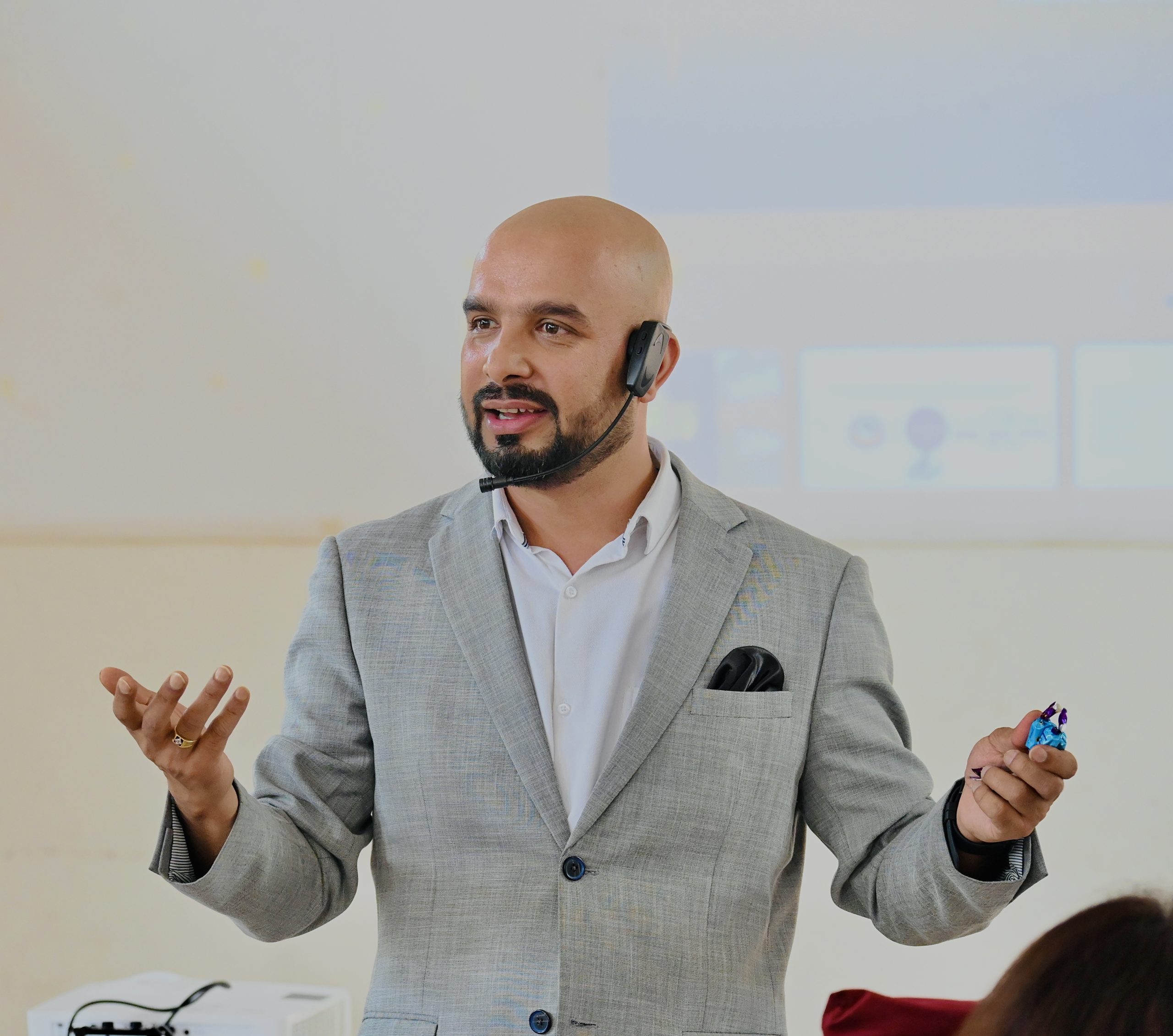
Why Work With Diwakar Rijal as Your Business Consultant?
My approach to business consulting comes from practical experience across sales, sales management, customer development, leadership, team performance and professional capability development.
My professional journey began in sales and progressed through B2B selling, account management and sales management, where I worked with customers, teams and value-based sales systems.
That experience influences how I approach consulting today: business recommendations should make sense not only in a presentation but also in front of customers, managers, salespeople and employees responsible for execution.
20+ Years of Practical Experience
My background is rooted in real sales, management, customers, teams and organizational performance rather than business theory alone.
Strategy Connected to Sales
Business growth ultimately requires customers and revenue. I therefore connect strategic decisions with the realities of sales execution and customer acquisition.
Consulting + Capability Development
When consulting identifies a skills or people gap, recommendations can be supported through sales training, leadership development, workshops or coaching rather than leaving the company with a document alone.
Execution and Accountability Focus
Strategies become valuable when people execute them. My approach emphasizes priorities, ownership, activities, measurement and performance review.
Professional Background at a Glance
- 20+ years of professional experience
- Experience in B2B sales, account management and sales leadership
- Sales management exposure across Nepal and India
- CEO of BaAma Consultant
- 100+ professional courses delivered
- 15,000+ professionals trained in sales, marketing and branding
- Experience working with professionals across multiple industries
Learn more about my professional background, explore the industries I work with or read client and participant testimonials.
Diagnose before prescribing.
Prioritize before expanding.
Build systems before demanding more effort.
Develop people so the system can work.
Measure execution rather than relying on intention.
Business Consultant vs Business Advisor vs Coach vs Trainer
These terms are sometimes used interchangeably, but the roles serve different purposes.
| Professional | Main Role | Best Used When |
|---|---|---|
| Business Consultant | Diagnoses business problems and develops strategic or operational solutions. | The company needs problem-solving, specialist expertise or a practical roadmap. |
| Business Advisor | Provides ongoing strategic perspective and guidance. | Management wants longer-term external input on important decisions. |
| Business Coach | Develops the thinking, leadership and decision-making capability of an individual. | An entrepreneur or manager needs guidance, reflection and accountability. |
| Business Trainer | Builds specific knowledge, skills and behaviors. | A team has a defined capability or performance gap. |
| Mentor | Shares relevant experience and perspective over time. | A leader wants developmental guidance from someone with relevant experience. |
A business problem may require more than one intervention.
For example, consulting may identify that inconsistent sales performance is caused by both an unclear sales process and weak discovery skills. The process can be redesigned through consulting while the team develops execution capability through sales training.
When Should You Hire a Business Consultant?
Hiring a consultant can make sense when the cost of remaining unclear or continuing with an ineffective approach is greater than the cost of obtaining external expertise.
Consider consulting when:
- Business growth has slowed and management does not know why
- Sales remain inconsistent despite repeated internal efforts
- The organization is preparing to scale
- The founder has become an operational bottleneck
- Management has too many priorities and limited focus
- Employees are active but performance lacks accountability
- A new market, segment or growth opportunity is being evaluated
- Customer acquisition has become more difficult
- The business requires a more systematic sales process
- Leadership capability has not kept pace with organizational growth
- An objective external perspective could improve an important decision
Consulting is most effective when management is prepared to provide accurate information, examine assumptions, make decisions and take action.
How to Choose the Right Business Consultant in Nepal
Do not select a consultant only because of a title, social-media presence or promotional claim. Begin with the problem you need help solving.
Then evaluate:
- Does the consultant have relevant expertise for your particular challenge?
- Do they ask diagnostic questions before recommending solutions?
- Do they understand practical realities of doing business in Nepal?
- Can they connect strategy with implementation?
- Is the consulting scope clearly defined?
- Are responsibilities and expected deliverables understandable?
- Can they communicate effectively with both management and employees?
- Do they recognize when another specialist is more appropriate?
- Is there a method for reviewing progress?
"What would you need to understand about our business before recommending a solution?"
A consultant who first wants to understand your customers, goals, people, processes, numbers and constraints is generally approaching the problem more carefully than someone who begins by selling a predefined solution.
How Much Does a Business Consultant Cost in Nepal?
There is no single consulting fee that is suitable for every organization because the amount and complexity of work can vary significantly.
The cost of a business consultant in Nepal can depend on:
- The complexity of the business problem
- The duration of the engagement
- The number of departments or employees involved
- The level of diagnosis or research required
- Workshops or team sessions required
- Whether implementation support is included
- The frequency of management or advisory sessions
- The type and number of expected deliverables
Common Business Consulting Engagement Models
| Engagement | Typical Purpose |
|---|---|
| Focused Consultation | Discuss a specific business decision, problem or strategic question. |
| Diagnostic Engagement | Examine a business problem, identify possible causes and establish priorities. |
| Project-Based Consulting | Address a defined challenge such as sales-process development, business strategy or accountability. |
| Consulting + Workshop | Improve the business system while developing the capability of managers or employees. |
| Ongoing Advisory Support | Provide periodic management review and strategic guidance over a longer period. |
The most practical first step is therefore to discuss the business problem. Once the challenge and expected scope are clear, an appropriate engagement can be proposed.
Request a Business ConsultationFrequently Asked Questions About Business Consulting in Nepal
What does a business consultant do in Nepal?
A business consultant helps an organization diagnose problems, evaluate opportunities and develop practical strategies for better performance. Depending on the company, this may include business strategy, growth, sales, customer development, leadership, processes, accountability or performance management.
Why would my business need a consultant?
A consultant can be useful when management needs specialized expertise, a structured approach to an important problem or an objective outside perspective. Consulting is particularly useful when growth has slowed, sales are inconsistent, strategy is unclear, the company is scaling or existing approaches are no longer producing the expected results.
Can a business consultant help increase sales?
Yes. A consultant with sales expertise can help identify problems related to customer targeting, lead generation, qualification, customer discovery, value proposition, pipeline management, negotiation, closing, follow-up, sales management and team accountability. The correct intervention depends on where the sales system is actually breaking down.
Can a business consultant help SMEs in Nepal?
Yes. SMEs can use consulting to address founder dependency, inconsistent sales, unclear roles, weak management systems, scaling challenges, customer acquisition, team accountability and business-process problems. The approach should reflect the SME's actual resources rather than copy systems designed for large corporations.
Do startups need business consultants?
Not every startup needs a consultant. Consulting can be useful when founders need outside perspective on target customers, business strategy, positioning, customer acquisition, sales, team structure or scaling. Early-stage consulting should remain practical and avoid unnecessary bureaucracy.
What is the difference between a business consultant and a business advisor?
The terms often overlap. A consultant is commonly engaged to diagnose or solve a particular business problem, while an advisor may maintain a longer-term relationship with management and provide ongoing strategic perspective. The agreed scope matters more than the title.
What is the difference between a business consultant and a business coach?
A consultant primarily focuses on diagnosing and solving a business problem. A business coach generally focuses more on developing an individual's thinking, leadership and decision-making ability. Some situations benefit from both approaches.
Can a consultant help prepare a business plan?
A consultant can help clarify the business model, target market, positioning, customer strategy, sales approach, objectives and implementation plan. Formal financial projections, tax advice, investment analysis or regulatory documentation may require suitably qualified specialists.
Can a consultant conduct market research in Nepal?
Practical market research can form part of a consulting engagement when relevant. This may include customer analysis, competitor assessment, positioning research, customer interviews, sales intelligence and opportunity evaluation. Large formal studies may require a specialized market-research provider.
How much does a business consultant cost in Nepal?
Business consulting fees vary according to scope, complexity, duration, research required, number of people involved, workshops, deliverables and implementation support. A focused advisory meeting and a multi-stage transformation project therefore require very different levels of work.
How do I choose the right business consultant in Nepal?
Start with the business problem you need to solve. Then evaluate relevant expertise, diagnostic thinking, understanding of the Nepalese business environment, implementation capability, scope clarity, professional boundaries and how progress will be reviewed.
Do you provide business consulting in Kathmandu and Lalitpur?
Diwakar Rijal is based in Gwarko, Lalitpur and works with business leaders and organizations on strategy, sales, leadership, customer development and execution-related challenges in Nepal.
Ready to Identify What Is Really Limiting Your Business Growth?
Business challenges rarely disappear because management simply works harder.
Sometimes the company needs a clearer strategy. Sometimes sales requires a better process. Sometimes customer targeting is wrong. Sometimes managers need stronger accountability. In other cases, the systems that helped the organization start are no longer sufficient to help it scale.
A focused business consultation can help you separate symptoms from root causes, clarify the most important priorities and decide what should happen next.
If your organization is facing challenges related to business strategy, sales growth, leadership, execution, customer development, team performance or scaling, we can begin with a focused discussion about your current situation.
Book a Business Consultation