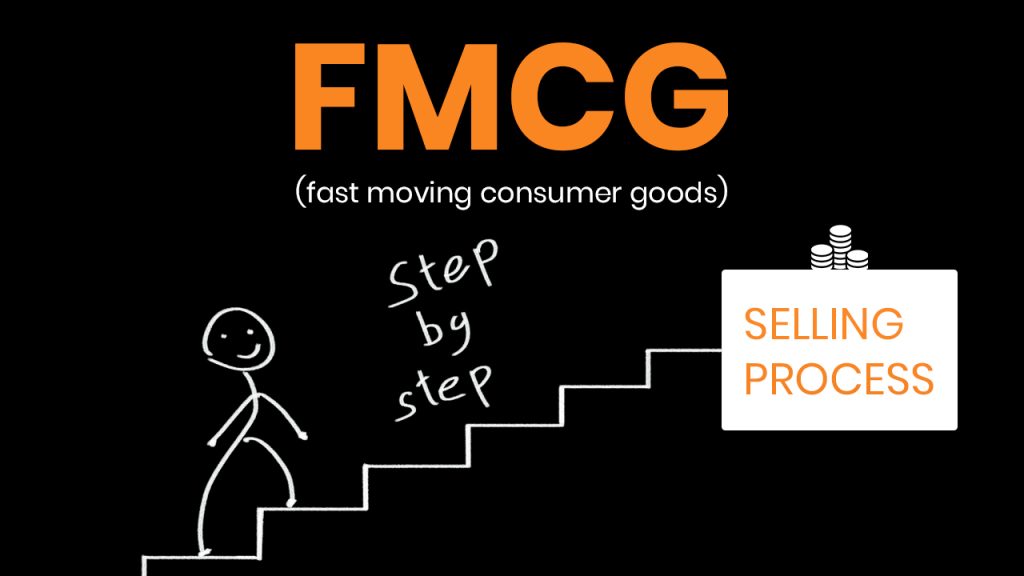
FMCG sales training in Nepal is becoming increasingly important for companies that depend on retailers, dealers, distributors, and field sales teams for daily business growth. A skilled sales trainer for FMCG helps salespeople go beyond simple order collection and develop the right mindset, process, and retail discipline needed to win in a competitive market.
Fast moving consumer goods are purchased frequently, consumed quickly, and replaced often. This makes the FMCG businesses highly dynamic. A product may be good, but if it is not available at the right outlet, placed in the right shelf position, offered at the right price, and supported by the right salesperson, sales can easily shift to a competitor.
In Nepal, where retail relationships, distributor networks, route planning, and dealer confidence play a major role, the selling process must be practical. Salespeople need more than motivation. They need a clear step-by-step system that helps them plan visits, understand retailers, present products, handle objections, close orders, and build long-term relationships.
This blog explains a complete FMCG retail sales process designed for sales representatives, supervisors, sales managers, distributors, and business owners who want to improve field productivity and sales team capability.
What Is the FMCG Selling Process?
The FMCG selling process is a structured method used by sales teams to identify potential outlets, plan routes, approach retailers, present products, negotiate terms, close orders, improve visibility, and maintain repeat business.
In simple words, it is the journey from finding the right dealer to building a productive long-term retail relationship.
A professional FMCG sales process usually includes:
| Step | Activity | Purpose |
| 1 | Understand retail category | Know where and how the product sells |
| 2 | Study retailer behaviour | Understand dealer expectations |
| 3 | Segment customers | Prioritize outlets based on potential |
| 4 | Prepare beat plan | Improve field visit productivity |
| 5 | Approach retailer | Start a meaningful sales conversation |
| 6 | Present and recommend | Sell based on need, margin, and movement |
| 7 | Handle objections | Remove buying hesitation |
| 8 | Close the order | Confirm quantity, SKU, price, and delivery |
| 9 | Execute merchandising | Improve visibility and availability |
| 10 | Follow up | Build trust and repeat purchase |
This process helps sales teams avoid random selling and move toward planned execution.
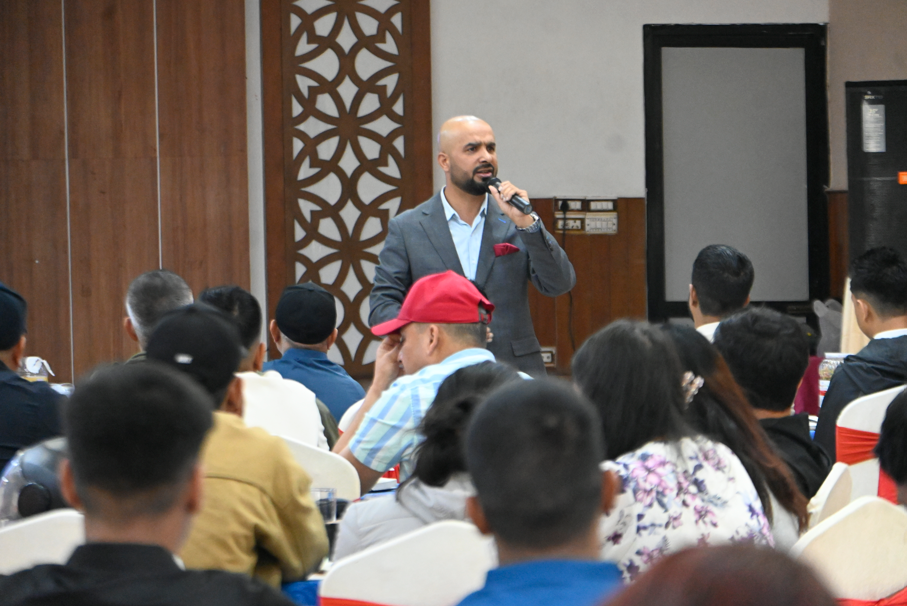
Why FMCG Sales Training is Important.
The Nepali FMCG market is relationship driven, price sensitive, and distribution focused. Retailers often deal with multiple brands in the same category. They compare margins, schemes, credit terms, delivery reliability, product movement, and salesperson behaviour before giving priority to any brand.
According to Nepal’s official trade data, wholesale and retail trade is one of the major contributors to the national economy. This shows how important retail channels are for business growth.
Source: Nepal Distributive Trade Survey 2022/23, National Statistics Office.
For FMCG companies, this means one thing clearly: field sales execution matters.
A well trained sales team can help the company:
- Improve sales per dealer
- Increase outlet coverage
- Build retailer confidence
- Reduce stock-outs
- Improve SKU availability
- Strengthen scheme communication
- Build stronger dealer relationships
- Increase target achievement discipline
Good FMCG sales training in Nepal should focus on both mindset and skillset. Salespeople need confidence, but they also need a process. Motivation may create short-term energy, but a strong selling system creates consistent performance.
Understanding Retail Category, Retail Behaviour, and Dealer Management
Before making a sales pitch, the salesperson must understand the retail environment. Every outlet is not the same. A small grocery store, wholesale dealer, mini-mart, supermarket, canteen, and rural retailer may all sell FMCG products, but their buying behaviour can be very different.
Retail Category Understanding
Retail category knowledge helps a salesperson understand where the product fits.
| Retail Type | Common Example | Sales Focus |
| General trade | Grocery stores, kirana shops | Relationship, availability, fast movement |
| Wholesale | Bulk dealers, stockists | Volume, margin, schemes |
| Modern trade | Supermarkets, marts | Visibility, display, category placement |
| HoReCa | Hotels, restaurants, cafes | Regular consumption and timely supply |
| Institutional buyers | Offices, schools, canteens | Consistency, pricing, and service |
A wholesaler may care about bulk margin. A small retailer may care about fast rotation and trust. A supermarket may care about shelf space and display discipline.
That is why one selling style does not work everywhere.
Retail Behaviour
Retailers usually think in practical terms. They want answers to questions like:
“Will this product sell?”
“What is my margin?”
“How fast will the stock rotate?”
“What scheme is available?”
“What support will the company provide?”
“What happens if the product does not move?”
“How is this better than the competitor?”
A trained salesperson should be ready to answer these questions clearly.
Retailers do not want long speeches. They want business logic. They listen when the salesperson talks about margin, demand, stock movement, visibility, customer preference, and repeat order potential.
Dealer Management
Dealer management is not just about taking orders. It includes regular communication, stock monitoring, payment follow-up, display improvement, scheme explanation, and complaint handling.
A good FMCG salesperson treats the dealer as a business partner, not just a buyer.
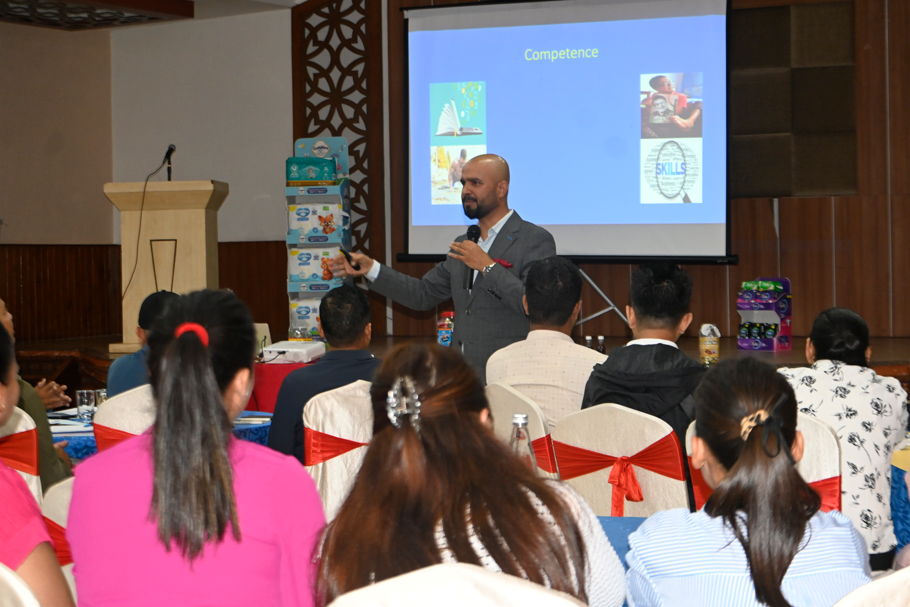
SPANCO Sales Model for FMCG B2B Selling
SPANCO is a useful model for managing the B2B sales pipeline. It helps salespeople track the journey from identifying a possible outlet to receiving an actual order.
SPANCO stands for:
| Stage | Meaning | FMCG Application |
| S | Suspect | A shop that may sell your product category |
| P | Prospect | A qualified outlet with real sales potential |
| A | Approach | First meaningful sales conversation |
| N | Negotiate | Discussion on margin, scheme, quantity, or credit |
| C | Close | Agreement to buy or expand purchase |
| O | Order | Confirmed order with SKU and quantity |
Suspect
A suspect is any outlet that could potentially sell the product. For example, if the company sells packaged snacks, then grocery stores, school canteens, mini-marts, tea shops, and supermarkets can all be suspects.
At this stage, the salesperson collects basic information such as outlet name, location, owner name, product category, competitor presence, and approximate customer flow.
Prospect
A prospect is a qualified suspect. The outlet has real potential, relevant customers, and some level of interest.
A salesperson should check whether the outlet already sells similar products, whether the retailer has good customer traffic, whether payment behaviour is reliable, and whether the location can influence nearby buyers.
Approach
The approach is the first serious conversation with the retailer.
A good opening should be respectful and business-focused.
Example:
“Namaste dai, I wanted to understand how this category is moving in your shop and suggest a product plan that may help you improve choice and margin.”
This is better than directly saying:
“Please buy this product.”
The first approach should create interest, not pressure.
Negotiate
Negotiation in FMCG commonly includes price, margin, scheme, credit, delivery, display space, and order quantity.
If the retailer says, “The margin is low,” the salesperson should not immediately reduce price or push harder. A better response is to understand the comparison.
For example:
“Which brand are you comparing with?”
“How fast does that product rotate?”
“What quantity usually sells in a week?”
“Would faster movement support your total profit?”
Good negotiation is not about winning an argument. It is about finding a workable business point.
Close
Closing means getting a clear commitment.
Instead of asking, “Will you buy or not?” a trained salesperson can use a choice-based close.
Example:
“Would you like to start with one carton of the fast-moving SKU or a mixed carton with two variants?”
This makes the decision easier for the retailer.
Order
The final stage is order confirmation. The salesperson should confirm SKU, quantity, price, scheme, delivery date, payment terms, and next visit date.
In FMCG, the sale is not fully complete until the order is delivered, displayed, and followed up.
Consultative Selling in FMCG
Consultative selling means understanding the retailer’s needs before recommending the product. It is one of the most useful methods in modern FMCG sales training.
Traditional selling says:
“Please buy my product.”
Consultative selling asks:
“What is moving well in your outlet?”
“Which product gives you better margin?”
“Which SKU is frequently out of stock?”
“What are customers asking for?”
“Which category has growth potential here?”
This approach changes the salesperson’s role. The person is no longer just an order collector. The salesperson becomes a retail business advisor.
Consultative Selling Process
| Step | Action | Purpose |
| Observe | Look at shelf, stock, display, and competitor products | Understand the outlet |
| Ask | Ask about movement, margin, and demand | Identify need |
| Diagnose | Find the business gap | Locate opportunity |
| Recommend | Suggest the right SKU and quantity | Offer solution |
| Confirm | Finalize order and next action | Secure commitment |
This model works especially well in Nepal because many retailers value personal trust and practical business suggestions.
Beat Plan and Tour Plan for FMCG Sales Teams
A beat plan is a daily route plan for visiting outlets. A tour plan is a broader travel plan, often used for weekly or monthly territory coverage.
Without proper planning, salespeople may visit outlets randomly, waste travel time, miss important dealers, and fail to meet daily productivity targets.
A good beat plan answers:
Which outlets should be visited today?
Which route should be followed?
Which dealer is high priority?
Which outlet needs stock replenishment?
Which retailer needs collection follow-up?
Which location has competitor activity?
Customer Segmentation
Customer segmentation helps salespeople give the right amount of attention to the right outlets.
| Customer Segment | Description | Suggested Visit Frequency |
| A-Class Outlet | High sales, strong influence, good potential | 2–3 times per week |
| B-Class Outlet | Medium sales and regular ordering pattern | Once per week |
| C-Class Outlet | Low volume or irregular order | 2–4 times per month |
| New Outlet | Recently added or under development | Frequent initial follow-up |
| Risk Outlet | Payment issue, stock issue, or competitor pressure | Close monitoring |
The purpose of segmentation is not to ignore smaller outlets. It is to manage time and effort according to business potential.
Route Optimization
Route optimization means arranging visits in a logical sequence. Salespeople should avoid unnecessary travel from one area to another and then back again.
For example, if a salesperson has outlets in Baneshwor, Koteshwor, and Tinkune, those areas should be grouped logically. Random movement reduces selling time and increases travel cost.
A productive route plan increases the number of quality calls per day.
Visit Frequency
Every outlet does not need the same visit frequency.
High-volume outlets need more frequent visits because their stock moves faster. Low-volume outlets may need less frequent visits but stronger relationship follow-up. New outlets may need close attention until buying behaviour becomes regular.
A good FMCG sales trainer teaches teams how to match visit frequency with outlet potential.
Sales Call Planning: From Opening to Closing
Every retail visit should have a purpose. A salesperson should not enter an outlet without knowing what they want to achieve.
Pre-Call Planning
Before meeting the retailer, the salesperson should review:
- Last order
- Current outstanding amount
- Stock position
- Focus SKU
- Current scheme
- Competitor activity
- Previous objection
- Today’s order objective
This preparation makes the conversation sharper and more professional.
Opening the Sales Call
The opening should be short, polite, and relevant.
Example:
“Namaste dai, last time the 500ml pack moved well. Today I wanted to check your current stock and suggest a plan for the weekend demand.”
This type of opening shows that the salesperson remembers the outlet and understands the retailer’s business.
Presentation and Product Detailing
FMCG product presentation should be simple and practical. Retailers usually do not have time for long explanations.
The presentation should cover:
- Product benefit
- Consumer demand
- Dealer margin
- Scheme
- Stock movement
- Display opportunity
- Recommended quantity
For new products, the salesperson can use samples, product demonstration, or comparison with existing demand.
Objection Handling
Retail objections are normal. A professional salesperson does not become defensive. The goal is to understand the real concern.
| Retailer Objection | Professional Response |
| “Price is high.” | “Let us compare the price with margin and movement.” |
| “This product may not sell.” | “We can start with a small trial quantity and support visibility.” |
| “I already have enough stock.” | “Which SKU is slow? We can focus only on the fast-moving item today.” |
| “Competitor gives better scheme.” | “Let us compare total value, movement, and service support.” |
| “Payment is difficult now.” | “We can plan a smaller order and align it with your cash flow.” |
Objection handling is not about forcing the retailer. It is about reducing uncertainty.
Closing the Sales Call
Closing should be clear and confident.
Example:
“Based on your current stock and upcoming demand, shall we place one carton of the regular SKU and half carton of the new variant?”
After the retailer agrees, the salesperson should confirm the order details immediately.
Upselling and Cross-Selling Techniques in FMCG
Upselling and cross-selling are important for improving outlet productivity.
Upselling means increasing the value of the order. This can happen through a larger quantity, better pack size, or higher-value SKU.
Cross-selling means adding related products to the order.
For example, if a retailer buys biscuits, the salesperson may introduce wafers, cookies, or complementary snack items. If a dealer buys small packs regularly, the salesperson may recommend a larger pack for better value or stronger margin.
Key Metrics for Sales Planning
| Metric | Meaning | Why It Matters |
| Sales per dealer | Average sales from each dealer | Measures outlet productivity |
| Dealer uptake | Number of dealers buying the product | Measures distribution strength |
| Effective SKU coverage | Number of active SKUs in an outlet | Measures range selling |
| Drop size | Average order value per visit | Measures visit efficiency |
| Repeat order rate | Frequency of reorder | Shows product movement |
Salespeople should not push every SKU to every outlet. They should recommend products based on location, outlet type, customer demand, and retailer capacity.
This is where smart sales planning becomes important.
FMCG Merchandising: The 5R Framework
Merchandising plays a major role in FMCG selling. A product may be present in the shop, but if customers cannot see it, sales may still be weak.
The 5R framework helps sales teams improve retail execution.
1. Right Product
The right SKU must be available in the outlet. If consumers ask for a small pack and only a large pack is available, the sale may be lost.
The salesperson should regularly check whether fast-moving SKUs are in stock.
2. Right Place
Products should be placed where customers can notice them easily.
Eye-level shelves, counter displays, category blocks, and end-cap displays can improve visibility. In small outlets, even a clean and visible counter position can make a difference.
3. Right Time
Stock and promotions should match demand timing.
For example, beverages may require stronger stock before summer. Snacks and gift packs may need more attention during festivals. Retail sales teams should align product push with seasonal and local demand.
4. Right Quantity
Too little stock creates missed sales. Too much stock creates pressure on retailer cash flow and storage.
The salesperson must recommend quantity based on movement history, upcoming demand, and retailer capacity.
5. Right Price
Price must be clear and visible. Retailers should use correct price labels, promotional tags, and scheme communication.
Pricing confusion can reduce buyer trust and create unnecessary conflict.
Target Setting to Target Achievement Process
Many salespeople receive monthly targets but do not break them into daily action. This is one of the biggest reasons for missed targets.
A target becomes achievable when it is converted into a daily plan.
Example of Target Breakdown
| Level | Example |
| Monthly target | NPR 1,200,000 |
| Weekly target | NPR 300,000 |
| Daily target | NPR 50,000 |
| Daily outlet visits | 25 outlets |
| Required productive calls | 18–20 outlets |
| Average order value needed | NPR 2,500–2,800 |
This breakdown makes the target practical.
The salesperson can now understand how many outlets to visit, how many orders to close, and what average order value is required.
Monthly Plan
A monthly FMCG sales plan should include territory target, product-wise target, dealer-wise target, scheme calendar, collection plan, new outlet target, and merchandising priorities.
Weekly Plan
The weekly plan should include beat schedule, focus outlets, focus SKUs, pending orders, payment follow-up, and competitor activity.
Daily Plan
The daily plan should include outlet list, call objective, order target, collection target, display target, and reporting notes.
Sales targets are achieved through daily consistency, not last-minute pressure.
Scheme Selling and Demand Generation
Schemes are common in FMCG, but a salesperson should not rely only on discounts or offers. A scheme is useful only when it creates movement and benefits both the company and the retailer.
A weak salesperson says:
“Scheme cha, linu na.”
A trained salesperson says:
“This scheme can help you increase your margin before weekend demand. If we display the fast-moving SKU near the counter, the stock can rotate faster.”
The second approach is stronger because it connects the scheme with business logic.
Mark-Up Method
The mark-up method starts from the buying cost and adds the dealer margin.
For example, if a retailer buys a product at NPR 90 and sells it at NPR 100, the profit is calculated based on the cost.
This helps explain dealer profitability clearly.
Mark-Down Method
The mark-down method starts from the selling price and calculates margin or discount backward.
This is useful when the retailer is focused on MRP, consumer offer, or promotional price.
A professional salesperson should know both methods because different dealers think differently.
Relationship Selling in FMCG
FMCG sales is not only about products and schemes. Relationships matter because retailers often choose the salesperson and company they trust.
Relationship selling includes appearance, behaviour, communication, listening, and follow-up.
Grooming and Dress-Up
A salesperson represents the company. Clean dress, proper grooming, organized sales materials, and professional body language create a good impression.
This does not mean wearing expensive clothes. It means being neat, prepared, and respectful.
Communication
Retailers are busy. Communication should be clear and useful.
A salesperson should explain:
What is new?
Why is it useful?
What is the retailer’s benefit?
What action is needed today?
When will delivery or follow-up happen?
Clear communication saves time and builds confidence.
Listening
Listening is one of the strongest sales skills.
When a salesperson listens carefully, they can understand stock issues, slow-moving products, competitor pressure, payment difficulty, and customer demand.
Retailers are more likely to support salespeople who listen before recommending.
What Makes a Smart FMCG Retail Salesperson?
A smart retail salesperson is not just someone who speaks well. The person must plan, observe, analyze, recommend, execute, and follow up.
| Skill Area | Expected Behaviour |
| Mindset | Growth-focused, responsible, and disciplined |
| Retail knowledge | Understands outlet type and dealer behaviour |
| Planning | Uses beat plan, tour plan, and daily targets |
| Selling skill | Applies SPANCO and consultative selling |
| Merchandising | Checks product, place, time, quantity, and price |
| Data habit | Tracks sales per dealer and SKU coverage |
| Relationship | Builds trust through consistency |
The best FMCG salespeople are not always the loudest. They are usually the most consistent.
They know their outlets, understand their retailers, and follow a disciplined process every day.
Our Workshop Methodology for FMCG Sales Training in Nepal

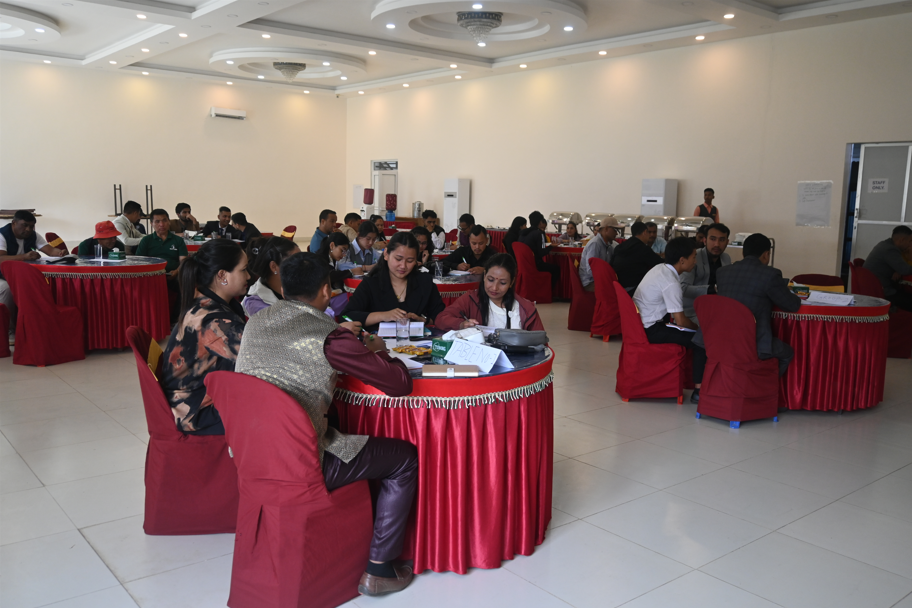
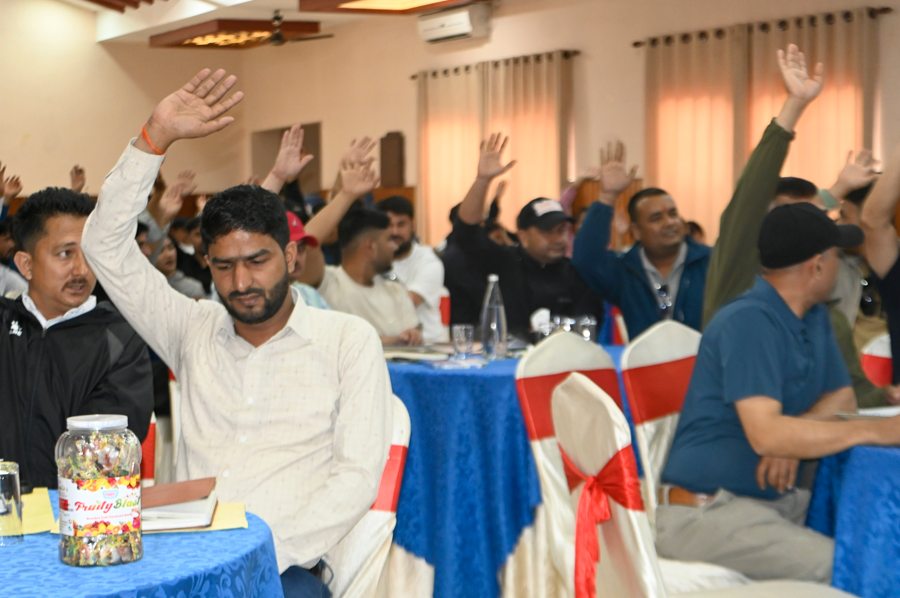
An effective FMCG sales workshop should be practical, interactive, and connected to real field situations. Salespeople learn better when they practice what they face in the market.
A professional workshop may include the following methods.
Icebreaker Activities
Icebreakers help participants become comfortable, active, and open to learning. They also help the trainer understand the confidence level and communication style of the group.
Presentation, Role Play, and Detailing Practice
Presentation gives the concept, but practice builds skill.
Role plays can include real FMCG situations such as:
- Opening a retailer call
- Explaining a new product
- Handling price objections
- Asking for better shelf space
- Negotiating order quantity
- Closing the sale
- Following up on payment
- Explaining schemes clearly
Detailing practice helps salespeople explain product value in simple and confident language.
Team Building Activities
FMCG sales requires coordination among sales representatives, supervisors, distributors, merchandisers, and managers.
Team building activities help improve ownership, communication, and collaboration. This is especially useful when the company wants to build a stronger performance culture.
The main purpose of the workshop is to build sales capability, update teams on retail sales processes and dealer behaviour, increase confidence, develop a growth mindset, and improve the skillset of a smart retail salesperson.
Practical FMCG Sales Checklist for Field Teams
Salespeople can use this simple checklist before and during market visits.
| Area | Question |
| Beat plan | Do I know today’s route and priority outlets? |
| Target | Do I know my daily sales and collection goal? |
| Stock | Have I checked current stock at the outlet? |
| SKU coverage | Are all important SKUs available? |
| Display | Is the product visible to customers? |
| Scheme | Have I explained the current scheme clearly? |
| Objection | Have I understood the real concern? |
| Closing | Have I confirmed quantity, price, and delivery? |
| Relationship | Have I listened and noted follow-up points? |
| Reporting | Have I updated order and market information? |
Training becomes valuable only when it turns into daily behaviour.
Common FMCG Sales Mistakes to Avoid
Even experienced salespeople can lose productivity when they ignore basic discipline.
1. Visiting Outlets Without Planning
Random visits reduce productivity. A salesperson should always follow a planned beat.
2. Talking Too Much
Retailers appreciate salespeople who listen and give practical suggestions. Talking too much can make the call ineffective.
3. Selling Only on Schemes
Schemes may help close orders, but product movement and service build long-term business.
4. Ignoring Merchandising
Availability alone is not enough. Products must be visible, well placed, and easy to buy.
5. Not Tracking SKU Coverage
Selling only one or two SKUs limits outlet potential. Range selling improves visibility and sales per dealer.
6. Weak Follow-Up
Retailers remember commitments. Timely follow-up creates trust and repeat business.
FAQs About FMCG Sales Training
What is FMCG sales training?
FMCG sales training is a practical training program that teaches sales teams how to sell fast-moving consumer goods through retailers, dealers, distributors, and wholesalers. It covers beat planning, outlet segmentation, consultative selling, objection handling, merchandising, closing techniques, and target achievement.
Why is FMCG sales training important in Nepal?
Sales training for FMCG is important in Nepal because the retail market depends heavily on relationships, distribution discipline, product availability, dealer confidence, and field execution. A trained sales team can improve productivity and build stronger retail coverage.
Who should attend FMCG sales training?
Sales representatives, sales supervisors, area sales managers, distributors, merchandisers, dealer development teams, and business owners can benefit from FMCG sales training.
What is the SPANCO model in FMCG sales?
SPANCO is a sales pipeline model that stands for Suspect, Prospect, Approach, Negotiate, Close, and Order. It helps salespeople manage outlet conversion and sales progress in a structured way.
What is a beat plan in FMCG?
A beat plan is a daily route plan that helps salespeople visit the right outlets in the right sequence. It improves time management, outlet coverage, and field productivity.
What are the 5R of FMCG merchandising?
The 5R of FMCG merchandising are Right Product, Right Place, Right Time, Right Quantity, and Right Price. These help ensure that products are available, visible, properly stocked, and clearly priced.
How can FMCG salespeople achieve monthly targets?
Salespeople can achieve monthly targets by breaking them into weekly and daily plans, improving productive calls, increasing sales per dealer, expanding SKU coverage, using schemes properly, and maintaining regular follow-up.
Conclusion
FMCG selling is not about pressure. It is about the process.
A professional salesperson understands the retailer, follows a planned beat, asks the right questions, recommends the right SKU, handles objections calmly, executes merchandising properly, and maintains strong relationships.
For companies looking for FMCG sales training in Nepal, the focus should be practical and field-oriented. The training should help sales teams improve confidence, understand dealer behaviour, develop a growth mindset, and follow a step-by-step retail sales process.
A capable FMCG sales trainer helps teams move from random selling to structured execution. That shift can improve productivity, strengthen dealer relationships, and support sustainable business growth.
Author Bio
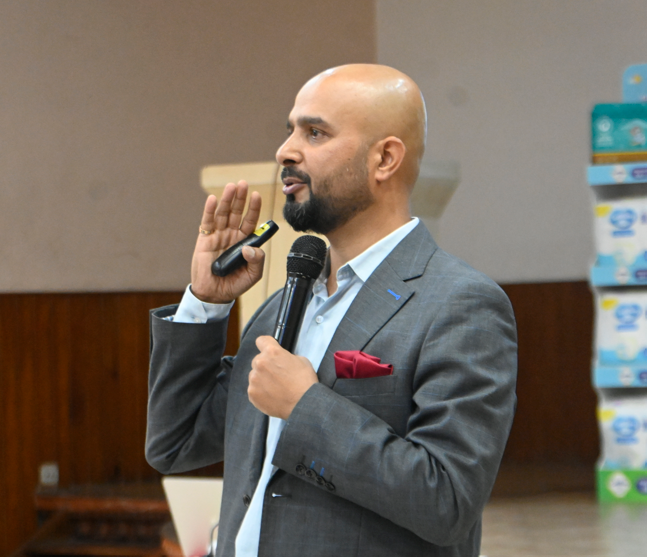
Diwakar Rijal is a corporate/FMCG sales trainer in Nepal focused on sales capability development, retail sales training, leadership development, and practical performance improvement. His training approach combines mindset development, structured selling methods, role play, and real market application for sales teams.