Learning how to sell life insurance is not only about explaining premium, bonus, maturity value, or policy benefits. A successful insurance agent must first help customers understand risk, protection, family responsibility, and financial planning. This is why modern insurance sales training focuses on moving agents from traditional push selling to need-based pull selling.
Life insurance is a trust based financial product. People do not buy it only because an agent presents a scheme. They buy when they understand why insurance matters, how it protects their family, and which policy fits their real situation.
Nepal’s insurance sector is steadily expanding, but public awareness remains one of its biggest challenges. According to the recent monthly indicators of the Nepal Insurance Authority, there were 16.526 million active life insurance policies as of Baisakh 2083, which falls around April to May 2026. This shows that life insurance already has a strong presence in Nepal, but there is still a clear need for better education, awareness, and more professional selling practices within the industry.
The real question is not only how to sell a policy. The better question is: how can an agent make the customer understand the value of insurance before presenting the policy?
That is where the difference between traditional selling and modern selling becomes important.
What Does Selling Life Insurance Really Mean?
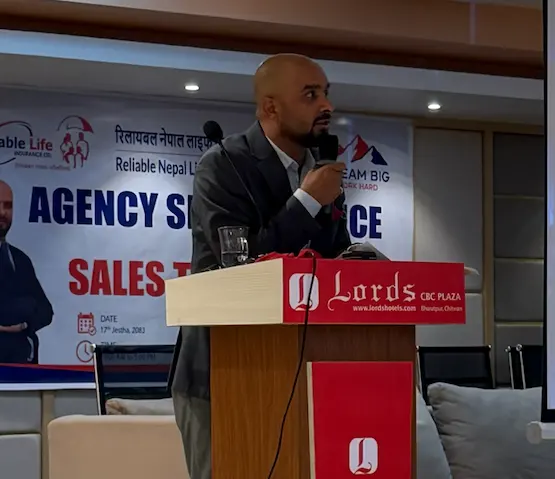
Selling life insurance is about helping people secure their family’s financial future against unexpected situations.
It is not just about selling a policy document. It is not only about collecting premiums or explaining maturity benefits. A meaningful life insurance conversation should help customers understand three important questions:
What financial risks could my family face?
What would happen if my income suddenly stopped?
Which insurance plan is suitable for my income, age, family responsibilities, and future goals?
A professional insurance agent does not start the conversation by saying, “Buy this policy.” Instead, a good agent first tries to understand the customer’s life, responsibilities, financial condition, and long-term needs.
In Nepal, life insurance companies generally offer different types of plans, including term insurance, endowment plans, whole life plans, anticipated plans, child education plans, retirement-focused plans, and microinsurance products. For example, Nepal Life Insurance provides product categories such as endowment, whole life, term, anticipated, and microinsurance plans.
Depending on the policy and company rules, agents may also explain additional benefits such as medical insurance support, accidental benefit, and critical illness riders. A critical illness rider is usually added to a main policy and provides financial protection if the insured person is diagnosed with specific illnesses covered under the rider.
Therefore, the real responsibility of an insurance agent is not to pressure people into buying a scheme. The true role is to educate customers, explain financial risks, build awareness, and recommend a suitable insurance solution based on the customer’s actual needs.
Traditional Selling of Insurance: The Push Selling Approach
Traditional selling is the old and conventional way of selling insurance. In this approach, the agent usually begins the conversation with the product instead of the customer’s actual need.
The discussion often sounds like this:
“This policy is very good.”
“This scheme gives attractive benefits.”
“You will receive a good return.”
“Please take this plan today.”
“This is the best insurance policy for you.”
This type of approach is known as push selling because the agent tries to push the product before the customer clearly understands why they need it.
In Nepal, many insurance agents still try to sell life insurance, medical insurance benefits, critical illness riders, accident benefits, or microinsurance plans by directly explaining product features. Their focus is mostly on the premium amount, bonus, policy duration, maturity value, and the company’s name.
However, the customer may not be mentally ready to buy. They may not fully understand insurance, may not feel the need for it, or may not have developed trust in the agent yet.
Because of this, the conversation often creates resistance instead of interest.
Why Traditional Insurance Selling Often Fails
Traditional insurance selling fails because it starts with the wrong question.
The agent thinks, “How can I sell this policy?”
The customer thinks, “Why should I buy this?”
There is a mismatch.
The agent is focused on the product. The customer is focused on their own life, budget, risk, and doubts.
When the agent starts explaining a scheme too early, the customer may feel pressure. They may listen politely, but internally they may already be preparing objections.
Common customer thoughts include:
“Why is this agent forcing me?”
“Is this policy really useful for me?”
“Is the agent saying this only for commission?”
“What if I cannot pay the premium later?”
“Will my family really get the claim?”
“Is insurance better than saving money myself?”
These doubts are normal. Insurance is a long-term financial commitment. People need clarity before they make a decision.
Common Problems in Traditional Insurance Selling
| Problem | What Happens |
| High rejection | Customers say no because they feel pressured. |
| Low conversion | Agents meet many prospects but close very few. |
| High objection | Customers object to premium, trust, timing, policy term, and claim process. |
| Weak relationship | The customer sees the agent as a seller, not an advisor. |
| Poor follow-up response | Customers avoid calls because they expect more pressure. |
| Low referral | A pressured customer is less likely to recommend the agent. |
| Agent frustration | The agent feels insurance sales are difficult and stressful. |
Many agents using the traditional approach experience a rough 10:1 conversion pattern. They may need to talk to around ten people to close one policy.
This is not a fixed industry rule, but it reflects a real field challenge: when agents push policies without creating awareness, rejection becomes high and conversion becomes low.
The problem is not always the policy. The problem is often the selling approach.
Why Customers Reject Insurance Agents
Customers usually reject insurance agents for five main reasons.
1. They Do Not Understand the Value
Insurance is an invisible product. The customer does not receive an immediate physical benefit like a phone, vehicle, or house.
So the agent must explain the financial value clearly.
2. They Feel the Premium Is an Expense
When customers do not understand protection, they see premium only as money going out.
A modern agent must explain the premium as part of financial protection, not just as a monthly or yearly cost.
3. They Do Not Trust the Agent Yet
Trust comes before a transaction.
If the agent sounds desperate, the customer becomes defensive. If the agent listens first, the customer becomes more open.
4. They Fear Long-Term Commitment
Many customers worry about future income, missed premiums, surrender value, and policy continuation.
These concerns should be handled with clear explanation, not pressure.
5. They Have Heard Negative Stories
Some people have heard stories about claim delays, policy misunderstanding, or agents who did not explain conditions properly.
This is why ethical selling and clear documentation are important.
Modern Selling of Insurance: The Pull Selling Approach
Modern insurance selling is a better approach because it starts with the customer’s need, not the company’s product.
This method is called pull selling.
In pull selling, the agent does not force the customer. Instead, the agent creates awareness, explains the concept, identifies the need, and helps the customer understand why insurance is relevant.
The modern approach follows this order:
- Explain what insurance is.
- Explain why insurance matters.
- Understand the customer’s financial responsibility.
- Identify the customer’s risk and life stage.
- Present the insurance concept.
- Recommend a suitable policy.
- Handle objections with clarity.
- Help the customer make an informed decision.
This is the foundation of modern insurance agent training.
The customer does not feel pushed. The customer feels guided.
Diwakar Rijal’s View: Sell the Concept Before the Policy

One of the biggest mistakes insurance agents make is presenting the policy too early.
When the conversation starts with premium, bonus, maturity value, or scheme details, the customer may feel like they are being sold something. They may not understand why the policy matters to them personally.
A better method is to sell the concept first.
Before discussing a policy, the agent should help the customer understand:
- What insurance actually means
- Why financial protection matters
- What happens to a family when income stops
- Why loans, children’s education, health risk, and retirement need planning
- How the right policy can support a specific life situation
This approach is different from traditional push selling. The agent does not chase the customer with pressure. The agent creates awareness and allows the customer to see the need.
That is the foundation of practical sales training for insurance agents: clarity before closing, trust before transaction, and concept before product.
Diwakar Rijal positions his insurance sales training around practical areas such as prospecting, trust-building, need-based selling, objection handling, follow-up, referral generation, and policy closing.
Traditional vs Modern Insurance Selling
| Area | Traditional Selling | Modern Selling |
| Selling style | Push selling | Pull selling |
| Starting point | Product features | Customer need |
| Agent role | Policy seller | Financial guide |
| Customer feeling | Pressure | Clarity |
| Main conversation | Premium, bonus, scheme | Risk, protection, goal |
| Objection level | High | Lower |
| Rejection level | High | Lower |
| Conversion | Often low | Usually better |
| Trust | Weak or temporary | Stronger and long-term |
| Follow-up | Repeated pressure | Value-based discussion |
Modern selling does not mean the agent avoids selling. It means the agent sells with education, relevance, and trust.
How to Sell Life Insurance Using the Modern Method
1. Start With Awareness, Not the Policy
The first step is to explain insurance in simple language.
A simple explanation can be:
“Life insurance is a financial protection plan. It helps make sure your family has financial support if your income stops due to an unexpected event covered by the policy.”
This explanation is clear. It does not sound like a sales pitch.
Many customers in Nepal know the word insurance, but they may not fully understand the difference between life insurance, medical insurance, critical illness rider, accident benefit, and microinsurance.
So the agent must first build awareness.
This is where an experienced insurance sales trainer focuses: before selling the policy, sell the concept.
2. Ask Need Based Questions
Modern selling depends on good questions.
The agent can ask:
“What are your main financial responsibilities right now?”
“Who depends on your income?”
“Do you have loans or business liabilities?”
“How are you planning for your children’s education?”
“What would your family do financially if your income stopped?”
“Do you already have life insurance or medical insurance?”
“Are you more concerned about protection, saving, health risk, or retirement?”
These questions help the customer think.
The purpose is not to scare the customer. The purpose is to make the financial risk visible.
When customers answer these questions, they often realize the need themselves. That is pull selling.
3. Identify the Customer’s Life Stage
Every customer does not need the same policy.
A young income earner may need income protection. A married person may need family security. A parent may need education planning. A business owner may need loan protection. A low-income household may need affordable microinsurance. A person worried about health risk may need medical insurance or critical illness protection.
Modern selling connects the policy to the customer’s life stage.
| Customer Type | Possible Need | Suitable Discussion |
| Young earner | Income protection | Term insurance or basic life cover |
| Married person | Family protection | Life insurance with suitable sum assured |
| Parent | Education and family security | Endowment or child-focused planning |
| Business owner | Loan and income risk | Protection planning with adequate coverage |
| Low-income household | Affordable cover | Microinsurance discussion |
| Health-conscious customer | Major illness risk | Critical illness rider or medical insurance |
| Person near retirement | Long-term planning | Whole life or retirement-focused planning |
This table is for general education. The actual recommendation depends on the customer’s age, income, health, underwriting, policy terms, and company rules.
4. Present the Concept Before the Product
A modern agent should not immediately show brochures, premium charts, or benefit illustrations.
First, present the concept.
For example:
“Your main concern is your children’s education and family income. So the policy should do two things: protect your family if something happens to you and support disciplined saving for the future.”
Only after this should the agent explain the policy.
This makes the customer understand why the product is being recommended.
The policy becomes a solution, not a sales item.
5. Explain Benefits in Simple Customer Language
Customers may not understand technical terms like sum assured, surrender value, paid-up value, underwriting, rider, nominee, or exclusion.
The agent must explain these terms in simple language.
| Insurance Term | Simple Explanation |
| Sum assured | The main protection amount promised by the policy |
| Premium | The amount paid to keep the policy active |
| Maturity benefit | Amount received if the policy completes its term |
| Rider | Extra benefit added to the main policy |
| Critical illness rider | Extra support if a covered serious illness is diagnosed |
| Nominee | Person who receives claim benefit |
| Policy term | Duration of the insurance contract |
| Exclusion | Situation not covered by the policy |
| Underwriting | Company’s process of checking risk before issuing a policy |
Simple language increases trust. Confusing language increases objection.
6. Use Ethical Persuasion
Insurance is a serious financial product. It affects the customer’s family, savings, and long-term security.
So agents must avoid exaggeration.
Do not say:
“This policy has no risk.”
“This will make you rich.”
“You must buy it today.”
“This is better than every investment.”
“Nothing bad will happen if you just take this policy.”
Say:
“This policy is designed for protection and long-term planning. The exact benefit depends on policy terms, premium payment, bonus declaration, rider conditions, and company rules.”
Ethical selling builds long-term reputation.
For YMYL topics such as insurance, trust is not optional. Customers need accurate, balanced, and transparent information.

Better Objection Handling for Life Insurance Agents
Objections are normal in insurance sales.
An objection does not always mean rejection. Often, it means the customer needs more clarity.
The traditional way of objection handling is to argue or push harder. The modern way is to understand the concern and respond with logic.
A practical objection handling process is:
Listen → Clarify → Acknowledge → Educate → Confirm
Objection 1: “Insurance is expensive.”
A weak response is:
“No, it is not expensive.”
A better response is:
“I understand. Is the premium difficult for your current budget, or do you feel the value of the benefit is not clear yet?”
This question helps identify the real issue.
If the issue is budget, the agent can adjust the plan.
If the issue is value, the agent can explain the protection benefit clearly.
Objection 2: “I will think about it.”
This usually means the customer is not fully convinced.
A better response is:
“That is understandable. Which part would you like to think about: premium, benefit, company trust, policy term, or claim process?”
This helps bring the hidden objection into the conversation.
The agent should not pressure the customer. The agent should help the customer make a clear decision.
Objection 3: “I already have insurance.”
This is not a rejection. It is an opportunity to review coverage.
A better response is:
“That is good. Do you know whether your current coverage is enough for your family income, loans, education goals, and future responsibilities?”
The goal is not to replace the existing policy unnecessarily. The goal is to check whether the customer is properly protected.
Objection 4: “I do not trust insurance companies.”
Trust objections require transparency.
The agent should explain:
- Company background
- Claim process
- Required documents
- Policy terms
- Exclusions
- Premium payment rules
- Grace period
- Surrender or paid-up conditions
- Contact and complaint process
Nepal Insurance Authority provides public information and insurance sector data, which can help customers understand that the industry is regulated.
Never hide conditions to close a sale. A hidden condition today can become a complaint tomorrow.
Objection 5: “I do not need insurance now.”
A better response is:
“What makes you feel it is not needed at this stage?”
Then listen carefully.
A young person may not feel urgency, but they may still have parents, loans, business plans, or future family goals. The agent should connect insurance to responsibility, not fear.
Modern insurance selling does not create panic. It creates awareness.
Why Modern Selling Gives Better Conversion
Modern selling improves conversion because the customer understands the reason before hearing the price.
When the customer understands the need, premium is no longer just an expense. It becomes part of a protection plan.
Modern selling creates:
- Better understanding
- Lower pressure
- Higher trust
- Fewer objections
- Better follow-up response
- Stronger referrals
- Long-term client relationships
- Better policy continuation
Product knowledge is important. But product knowledge alone is not enough.
An agent also needs communication skill, emotional intelligence, listening ability, analysis, and professional follow-up.
That is why structured insurance agent training is important for both new and experienced agents.
Role of Insurance Sales Training in Nepal

Insurance agents need practical training because life insurance is a trust based product.
A good training program should not only motivate agents for one day. It should improve field behavior.
| Training Area | Why It Matters |
| Product knowledge | Agents must understand policy types, riders, terms, and exclusions. |
| Prospecting skill | Helps agents identify the right customer segment. |
| Need analysis | Helps match the policy with the customer’s real situation. |
| Communication skill | Builds clarity and confidence. |
| Objection handling | Reduces rejection and improves conversion. |
| Follow-up discipline | Helps agents stay professional without pressure. |
| Referral generation | Creates long-term business opportunities. |
| Ethical selling | Protects customer trust and agent reputation. |
| Closing skill | Helps customers make clear decisions. |
A skilled insurance sales trainer does not only teach agents what to say. They teach agents how to think, listen, explain, and guide.
The best insurance agent is not the one who talks the most. The best agent is the one who asks better questions and explains clearly.
Practical Modern Life Insurance Sales Script
Agents can use this simple structure in the field.
Opening
“Thank you for your time. I will not directly ask you to buy a policy. First, I would like to understand your financial responsibilities and explain how insurance works.”
Need Discovery
“Who depends on your income right now?”
“Do you have any loans or future financial goals?”
“What kind of protection or savings plan do you already have?”
“What would your family need financially if your income stopped?”
Concept Explanation
“Insurance is a way to protect your family’s financial plan. If income stops because of an unexpected event covered by the policy, the policy can provide financial support according to its terms.”
Policy Recommendation
“Based on your responsibility and budget, this plan may be suitable because it gives protection and also supports long-term planning.”
Objection Handling
“I understand your concern. Let us separate the issue into premium, benefits, claim process, company trust, and policy term so the decision becomes clear.”
Closing
“Based on what we discussed, does this plan solve the financial concern we identified?”
This script is simple, respectful, and customer-focused.
What Not to Do While Selling Life Insurance
Agents should avoid these mistakes:
- Do not force relatives and friends to buy.
- Do not explain too many products in one meeting.
- Do not promise unrealistic returns.
- Do not hide exclusions or policy conditions.
- Do not compare companies unfairly.
- Do not create fear unnecessarily.
- Do not follow up so aggressively that the customer feels uncomfortable.
- Do not sell a policy that does not match the customer’s income or need.
In insurance sales, reputation matters.
One ethical sale can bring referrals. One forced sale can damage trust.
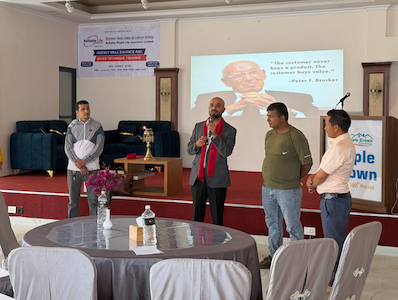
Data Snapshot: Why Insurance Awareness Still Matters in Nepal
| Indicator | Reported Figure | Why It Matters for Agents |
| In-force life insurance policies | 16.526 million | Shows a strong existing base for life insurance |
| Life insurance policies issued | 6.673 million | Indicates continuing market activity |
| Micro life insurance policies issued | 4.754 million | Shows growing relevance of accessible insurance |
| Non-life insurance policies issued | 2.831 million | Shows broader insurance awareness beyond life insurance |
These Nepal Insurance Authority indicators for Baisakh 2083 / Apr-May 2026 show that insurance activity is significant, but the quality of customer education still matters.
For agents, the opportunity is not only to sell more policies. The real opportunity is to educate the market better.
Need Practical Insurance Sales Training?
Insurance companies, agency managers, and branch teams need more than motivation.
Agents need practical tools to handle real field challenges such as rejection, weak prospecting, poor follow-up, low confidence, price objections, trust issues, and difficulty explaining policy benefits.
Our insurance sales training program is designed for life insurance agents, agency managers, sales teams, and insurance professionals who want to improve customer communication, concept presentation, objection handling, follow-up discipline, referral generation, and policy closing.
Featured Answer:How to sell life insurance?
The best way to sell life insurance is to use a modern need-based insurance selling techniques. First, explain what insurance is and why it matters. Then understand the customer’s income, dependents, loans, goals, and risk exposure. After that, recommend a suitable policy and explain its benefits in simple language. This pull-selling method creates lower rejection, fewer objections, and stronger customer trust than traditional push selling.
FAQs on How to Sell Life Insurance
1. How do you sell life insurance effectively?
Sell life insurance by understanding the customer’s financial responsibility first, then explaining how insurance protects their family from income loss and future uncertainty.
2. What is the traditional method of selling insurance?
Traditional insurance selling is a push-selling method where agents directly promote policies, schemes, premiums, and benefits without first understanding the customer’s need.
3. Why is traditional insurance selling less effective?
Traditional selling is less effective because it creates pressure. Customers often reject the offer when they do not understand the value or feel forced to buy.
4. What is modern insurance selling?
Modern insurance selling is a pull-selling approach where the agent educates the customer, identifies needs, explains the insurance concept, and recommends a suitable policy.
5. What is the difference between push selling and pull selling?
Push selling forces the product toward the customer. Pull selling helps the customer understand the need so they become interested in the solution.
6. What types of insurance should agents explain in Nepal?
Agents may explain life insurance, term insurance, endowment plans, whole life plans, microinsurance, medical insurance, accident benefits, and critical illness riders depending on customer need.
7. What is the best objection handling method in insurance sales?
The best method is to listen, clarify, acknowledge, educate, and confirm. Agents should not argue with objections. They should identify the real concern and answer clearly.
8. How can agents reduce rejection in life insurance sales?
Agents can reduce rejection by educating first, asking need-based questions, recommending relevant policies, explaining benefits simply, and avoiding pressure.
9. Why is insurance agent training important?
Insurance agent training improves product knowledge, communication skills, ethical selling, need analysis, objection handling, follow-up, and customer trust.
10. What makes a good insurance sales trainer?
A good insurance sales trainer teaches practical field skills such as prospecting, need analysis, trust-building, customer psychology, objection handling, referral generation, and closing.
Conclusion
Selling life insurance is not about forcing people to buy a scheme. It is about helping them understand risk and guiding them toward the right protection.
The traditional approach starts with the product. It focuses on premium, bonus, maturity value, and policy features. This push-selling method often creates high rejection, low conversion, and many objections.
The modern approach starts with awareness. The agent explains what insurance is, why it matters, how it protects the family, and which policy benefit fits the customer’s real need. This pull-selling method is more respectful, ethical, and effective.
For insurance agents in Nepal, the future belongs to those who can build trust, ask better questions, explain clearly, and handle objections professionally.
A well-trained agent does not pressure the customer. A well-trained agent helps the customer make a confident financial decision.
Ready to Improve Your Insurance Sales Team’s Performance?
Selling life insurance becomes easier when agents stop forcing policies and start building trust.
With the right training, agents can learn how to approach prospects, explain insurance clearly, handle objections, present policy benefits, follow up professionally, and close with confidence.
For practical insurance sales training in Nepal, Diwakar Rijal provides customized training programs for life insurance agents, agency managers, branch teams, and insurance sales professionals.
Book Insurance Sales Training Consultation: https://diwakarrijal.com.np/contact/ , +977 980-1013376
Author: Diwakar Rijal
Diwakar Rijal is a sales trainer, performance catalyst, and marketing consultant in Nepal. He helps sales teams and insurance professionals improve prospecting, communication, need-based selling, objection handling, follow-up discipline, and sales performance through practical, field-focused training programs.