
Motivation and Action work best when they are used together. Motivation gives people the energy, confidence, and reason to perform. Action turns that energy into daily habits, measurable goals, follow-up, and workplace results.
For companies, sales teams, managers, and HR leaders, the real question is not just “How do we motivate employees?” The better question is: “How do we convert motivation into consistent action?”
This is where a practical motivational session, guided by an experienced motivational speaker in Nepal, can help teams move from inspiration to execution.
Diwakar Rijal’s work focuses on sales training, leadership development, emotional intelligence, consultative selling, and performance accountability for organizations in Nepal. He also describes his approach as moving beyond basic motivational speeches toward practical frameworks that support measurable growth.

Why Motivation Alone Is Not Enough
Many workplace motivation programs create temporary excitement. Employees clap, feel inspired, and return to work with good intentions.
But after a few days, old habits often return.
That happens because motivation without action does not create a system. It creates emotion. Emotion is useful, but it needs direction.
For example, a sales team may feel motivated after hearing a powerful story. But unless they know what to do differently on Monday morning, results may not change.
They still need:
| Motivation Gives | Action Creates |
| Energy | Execution |
| Confidence | Consistency |
| Purpose | Priorities |
| Inspiration | Daily habits |
| Positive mindset | Measurable results |
| Hope | Accountability |
The best workplace results happen when people feel motivated and also know exactly what action to take next.
That is why Diwakar Rijal’s motivational positioning uses the idea of “MotivActional” work: not just motivation, but motivation plus action. His website describes this approach through sessions such as “The Power of Baby Steps – From Goal Setting to Goal Getting” and emphasizes structured action planning.
What Does “Motivation and Action” Mean in the Workplace?
In the workplace, Motivation and Action means combining emotional drive with practical execution.
Motivation answers:
Why should I care?
Action answers:
What should I do next?
A motivated employee may want to perform better. An action-oriented employee has a clear plan, follows a routine, tracks progress, and improves through feedback.
For a sales team, this may mean:
- Making more quality calls
- Following up with prospects on time
- Preparing better before client meetings
- Handling objections with confidence
- Recording sales activities properly
- Reviewing lost deals and improving the pitch
For managers, it may mean:
- Giving clearer goals
- Coaching regularly
- Recognizing useful effort
- Removing workflow barriers
- Tracking performance fairly
- Helping team members connect work with purpose
Motivation starts the movement. Action sustains it.
How Motivation Helps in the Workplace
Motivation helps employees bring more focus, ownership, and energy to their work. It can improve how people respond to challenges, customers, deadlines, and team responsibilities.
In simple terms, motivated employees are more likely to show up mentally, not just physically.
Gallup’s large Q12 meta-analysis studied 736 research studies across 347 organizations, 53 industries, 90 countries, more than 183,000 business units, and over 3.3 million employees. It found that employee engagement is connected with outcomes such as productivity, profitability, customer loyalty, turnover, absenteeism, safety, and wellbeing.
This matters because workplace motivation is closely linked with engagement. When people understand their role, feel supported, and see meaning in their work, they are more likely to contribute.
Motivation improves workplace behavior in five ways
| Workplace Area | How Motivation Helps |
| Productivity | Employees focus more on meaningful output |
| Teamwork | People become more willing to support others |
| Sales | Salespeople handle rejection with more resilience |
| Learning | Employees become open to feedback and improvement |
| Retention | People are more likely to stay where they feel valued |
Motivation does not remove pressure from work. Instead, it helps people respond to pressure with clarity and discipline.
How Action Converts Motivation Into Results
Action is the bridge between intention and performance.
A person may be motivated to become better at sales. But the improvement happens only when they practice, make calls, ask better questions, follow up, track objections, and learn from feedback.
McKinsey research found that 72% of surveyed employees cited goal setting as a strong motivator. Employees felt more motivated when goals were measurable, connected to company priorities, and included both individual and team-level goals.
This shows why action must be structured.
A team does not need only emotional energy. It needs clear goals, clear behaviors, and regular review.
Example: Motivation vs Action in sales
| Situation | Motivation Only | Motivation + Action |
| Low sales confidence | “Believe in yourself” | Practice objection handling twice a week |
| Poor follow-up | “Stay committed” | Use a daily follow-up checklist |
| Weak prospecting | “Be proactive” | Block 90 minutes daily for calls |
| Team conflict | “Work together” | Set shared targets and weekly review rhythm |
| Missed targets | “Push harder” | Analyze pipeline gaps and improve conversion steps |
Motivation gives the team emotional readiness. Action gives the team operational discipline.
Why Workplace Results Depend on Both Energy and Execution
Workplace performance is not created by motivation alone. It is created by repeated behavior.
A company may have talented employees, but if daily habits are unclear, results become inconsistent. On the other hand, a company may have strict processes, but if people are not emotionally engaged, execution becomes mechanical.
The ideal workplace has both:
- Energy — people care about the outcome
- Execution — people know what to do and do it consistently
Gallup reports that highly engaged business units show 78% less absenteeism, 14% higher productivity, 18% higher sales productivity, 10% higher customer loyalty, and 23% higher profitability compared with lower-engagement units.
These numbers do not mean motivation alone guarantees success. They show that engaged, aligned, and well managed teams tend to perform better across important business outcomes.
Why Companies in Nepal Need Action Oriented Motivation
Many organizations in Nepal operate in competitive, relationship driven markets. Sales cycles can be long. Customer trust matters. Teams often deal with price objections, delayed decisions, market uncertainty, and changing buyer behavior.
In this environment, a generic speech may not be enough.
Companies need motivational training that connects mindset with field reality.
A practical motivational speaker for sales team should understand:
- How sales pressure affects confidence
- Why follow-up discipline matters
- How rejection affects performance
- Why managers need coaching skills
- How to connect targets with daily activity
- How to build accountability without fear
This is especially important for sales, banking, insurance, pharmaceuticals, education, healthcare, hospitality, and service-based organizations.
Diwakar Rijal highlights corporate sales training, sales leadership, emotional intelligence for sales, and consultative selling as key service areas. It also describes programs for CEOs, business owners, sales directors, and HR leaders who want structured training rather than quick-fix seminars.
The Motivation-to-Action Framework for Workplace Results
A strong motivational session should not end with applause. It should end with clarity.
Here is a practical framework companies can use.
1. Purpose: Why does this work matter?
Employees perform better when they understand how their role contributes to the bigger goal.
For example, a customer service employee is not just “answering calls.” They are protecting customer trust. A salesperson is not just “closing deals.” They are solving client problems and creating business growth.
Purpose makes work meaningful.
2. Clarity: What result are we trying to improve?
Motivation becomes weak when goals are vague.
Instead of saying, “Improve performance,” say:
- Increase qualified leads by 20%
- Improve follow-up response time
- Reduce customer complaints
- Increase repeat purchases
- Improve team meeting participation
- Complete product training by a specific date
Clear goals help people focus.
3. Action: What behavior must change?
Results are lag indicators. Behavior is the daily driver.
For example:
| Desired Result | Required Action |
| More sales | Better prospecting and follow-up |
| Better teamwork | Clear roles and communication habits |
| Higher productivity | Fewer distractions and better prioritization |
| Improved customer service | Faster response and better listening |
| Stronger leadership | Regular coaching conversations |
4. Accountability: How will progress be reviewed?
Without review, action fades.
Accountability should not feel like punishment. It should feel like support.
Managers can ask:
- What did you complete this week?
- What blocked your progress?
- What support do you need?
- What will you improve next week?
- Which activity created the best result?
5. Recognition: What progress should be reinforced?
People repeat behavior that gets noticed.
Recognition does not always need to be financial. Managers can recognize effort, consistency, learning, teamwork, customer care, and improvement.
This builds a culture where action becomes visible.
How Motivation Improves Workplace Efficiency and Productivity
Motivation improves efficiency by reducing wasted effort. When employees know why the work matters and what action matters most, they spend less time on confusion, delay, and low-priority tasks.
Productivity does not mean doing more things. It means doing the right things better.
A motivated and action-focused team is more likely to:
- Start work with priorities
- Avoid unnecessary delays
- Communicate faster
- Solve problems earlier
- Follow processes properly
- Take ownership of outcomes
McKinsey’s workplace research also shows that organizations may have employees who create value and others who feel relatively unproductive. The practical challenge for leaders is to re-engage people and create conditions where high contributors can continue performing well.
Productivity improves when managers connect goals with action
| Manager Behavior | Workplace Impact |
| Sets clear expectations | Reduces confusion |
| Explains why goals matter | Builds ownership |
| Reviews progress regularly | Keeps action on track |
| Gives useful feedback | Improves skills |
| Removes obstacles | Increases speed |
| Recognizes progress | Sustains motivation |
This is why a good motivational session should include managers, not only frontline employees.
How to Motivate and Inspire Your Team to Achieve Better Results
To motivate and inspire your team, combine emotional encouragement with practical direction.
Here are proven steps.
Start with listening
Before telling people what to do, understand what is blocking them.
Ask:
- What makes your work difficult?
- Where do you need more clarity?
- Which process slows you down?
- What support would improve your performance?
- What motivates you personally?
Motivation becomes stronger when employees feel heard.
Set clear and measurable goals
A vague goal like “work harder” is not useful.
A better goal is:
“Each sales executive will contact 20 qualified prospects per week and update follow-up status every Friday.”
Clear goals reduce excuses and increase focus.
Connect individual work to team success
People work better together when they see how their role affects others.
For example, if marketing generates leads but sales does not follow up, the team loses opportunities. If sales closes deals but service does not deliver well, customer trust suffers.
Team motivation improves when people understand this connection.
Give people ownership
Micromanagement weakens motivation. Ownership strengthens it.
Give team members room to suggest solutions, improve processes, and take responsibility for results.
Train skills, not just mindset
A salesperson may be motivated but still fail if they lack negotiation skills. A manager may care about the team but still struggle without coaching skills.
Motivation must be supported by capability.
Create short action cycles
Instead of waiting for annual reviews, create weekly or monthly action cycles.
Example:
- Set one priority
- Define three actions
- Track progress
- Review results
- Improve the process
Small action cycles make improvement practical.
Why Motivational Sessions Work Better When They Include Follow-Up
A one-time motivational session can create awareness. But follow-up creates change.
Employees need a way to apply what they learned.
A strong corporate motivational session may include:
| Session Element | Why It Matters |
| Real workplace examples | Makes the message relatable |
| Reflection exercises | Helps employees connect personally |
| Team discussion | Builds shared understanding |
| Action planning | Converts ideas into behavior |
| Manager alignment | Keeps momentum after the session |
| Follow-up review | Measures progress |
Without follow-up, motivation can become temporary. With follow-up, it becomes a performance system.
This is especially valuable for companies in Nepal hiring a motivational speaker for sales teams, leadership groups, or corporate staff.
Motivation and Action for Sales Teams
Sales teams need a special type of motivation.
They face rejection, pressure, monthly targets, price objections, customer delays, and competition. A general motivational message may help, but salespeople also need practical tools.
A sales-focused motivational session should address:
- Prospecting discipline
- Confidence after rejection
- Consultative selling
- Objection handling
- Pipeline management
- Follow-up rhythm
- Customer psychology
- Personal accountability
A motivational speaker hired for the sales team should not only say, “Stay positive.” They should help the team understand what to do when a client says, “It is too expensive,” “I will think about it,” or “Send me details.”
That is where motivation becomes useful.
Sales example: turning motivation into action
| Sales Challenge | Motivational Message | Action Step |
| Fear of rejection | Rejection is part of the process | Make a fixed number of calls daily |
| Weak closing | Confidence comes from preparation | Practice closing questions weekly |
| Poor follow-up | Persistence creates trust | Use a follow-up calendar |
| Low conversion | Learn from every meeting | Review lost deals every Friday |
| Target pressure | Focus on controllable actions | Track pipeline activity daily |
Sales results improve when motivation becomes behavior.
How People Can Be Motivated to Work Together More Effectively
People work together better when they share goals, trust each other, communicate clearly, and understand how their roles connect.
Team motivation is not created only by speeches. It is created by daily team habits.
Build shared goals
If every department works only for its own target, collaboration becomes weak.
Shared goals encourage people to think beyond their individual tasks.
Example:
Instead of sales, marketing, and service having separate goals only, create one shared customer retention goal.
Clarify roles
Many workplace conflicts come from unclear roles.
People may ask:
- Who is responsible?
- Who approves this?
- Who follows up?
- Who reports the issue?
- Who owns the final result?
Clear roles reduce blame.
Encourage respectful communication
Teams perform better when people can speak honestly without fear.
This does not mean everyone agrees all the time. It means disagreement is handled professionally.
Celebrate team progress
Recognition should not only go to individual stars. It should also go to teams that cooperate well, solve problems, and support customers.
Make action visible
Use simple dashboards, checklists, team boards, or weekly reviews. When progress is visible, people become more accountable.
Signs Your Team Needs a Motivation and Action Session
A company may benefit from a practical motivational session when it notices:
| Warning Sign | What It May Mean |
| Employees seem busy but results are low | Action is not focused |
| Sales team lacks energy | Motivation and confidence may be weak |
| Targets are clear but follow-through is poor | Accountability system is missing |
| Team members blame each other | Shared ownership is weak |
| Managers repeat instructions often | Communication and clarity need improvement |
| Training does not create results | Follow-up action plan is missing |
These signs do not always mean employees are lazy. Often, they mean the system lacks clarity, energy, coaching, or reinforcement.
How Leaders Can Sustain Motivation After a Session
A motivational session is the starting point, not the finish line.
Leaders should sustain it through daily and weekly management habits.
Use the 3-question weekly review
Managers can ask:
- What action did you complete this week?
- What result did it create?
- What will you improve next week?
This keeps people focused on behavior, not excuses.
Turn goals into visible routines
For example:
- Monday: set weekly priorities
- Wednesday: review progress
- Friday: discuss lessons learned
- Monthly: recognize improvement
Simple routines are easier to sustain than complex systems.
Coach instead of only correcting
Correction focuses on mistakes. Coaching focuses on improvement.
A coaching manager asks better questions, listens carefully, and helps employees find practical next steps.
Reward consistency
Do not recognize only final results. Recognize the actions that lead to results.
For example, in sales, recognize quality follow-up, CRM discipline, customer insight, product learning, and teamwork.
Common Mistakes Companies Make With Workplace Motivation
Many organizations invest in motivation but do not get lasting results because they make these mistakes.
Mistake 1: Treating motivation as entertainment
A motivational session should be engaging, but it should not only entertain. It should connect with business reality.
Mistake 2: No action plan
Employees should leave the session with clear next steps.
Mistake 3: No manager involvement
If managers do not reinforce the message, employees quickly return to old habits.
Mistake 4: Overloading employees with too many goals
Too many goals create confusion. A few clear priorities work better.
Mistake 5: Ignoring skill gaps
Motivation cannot replace training. If employees lack skills, they need practice, coaching, and tools.
Mistake 6: No measurement
If companies do not measure progress, they cannot know whether the session helped.
What to Measure After a Motivational Session
To know whether a session worked, track both behavior and business outcomes.
| Area | What to Measure |
| Sales activity | Calls, meetings, follow-ups, proposals |
| Sales quality | Conversion rate, average deal size, lost-deal reasons |
| Teamwork | Cross-department response time, internal feedback |
| Productivity | Completed tasks, turnaround time, output quality |
| Engagement | Attendance, participation, manager feedback |
| Customer impact | Complaints, satisfaction, repeat business |
The goal is not to measure everything. The goal is to measure what matters.
For a sales team, this may include pipeline movement, follow-up discipline, conversion rate, and customer meetings.
For a leadership team, this may include coaching frequency, team clarity, accountability rhythm, and employee feedback.
Choosing a Motivational Speaker in Nepal
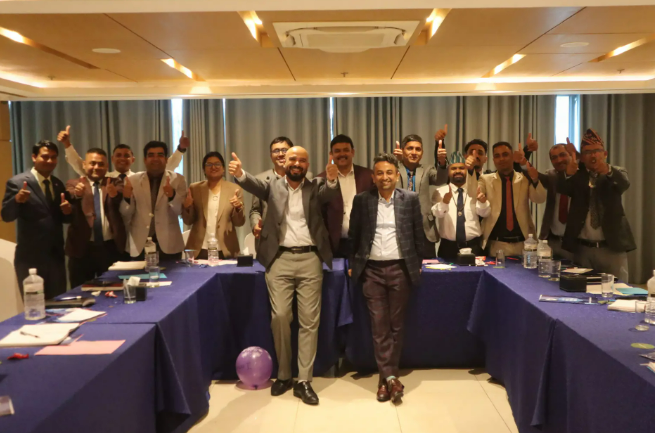
When choosing a motivational speaker in Nepal, companies should look beyond stage presence.
A good speaker should understand business realities and help participants take practical action.
Look for:
| What to Look For | Why It Matters |
| Business experience | Makes examples realistic |
| Sales or leadership understanding | Helps connect motivation with results |
| Action planning | Converts inspiration into execution |
| Customization | Fits your company’s actual challenges |
| Manager involvement | Improves follow-through |
| No exaggerated promises | Builds trust |
| Practical tools | Supports long-term change |
Diwakar Rijal positions his work around sales training, manager coaching, emotional intelligence, sales execution systems, and structured performance improvement. This makes the topic of motivation and execution especially relevant for companies seeking a practical corporate session in Nepal.
Motivation and Action: A Practical Workplace Model
Here is a simple model organizations can apply after a motivational session.
Step 1: Define the performance gap
Example:
“Our sales follow-up is slow.”
Step 2: Identify the motivation gap
Example:
“Salespeople feel discouraged after rejection.”
Step 3: Identify the action gap
Example:
“There is no fixed follow-up process.”
Step 4: Set a behavior goal
Example:
“Every prospect gets a follow-up within 24 hours.”
Step 5: Review weekly
Example:
“Managers review follow-up reports every Friday.”
Step 6: Recognize progress
Example:
“Recognize the most consistent follow-up behavior.”
This model turns motivation into workplace discipline.
The Role of Emotional Intelligence in Motivation and Action
Emotional intelligence is important because people do not work like machines. Their energy, confidence, communication, and decision-making are affected by emotions.
In sales, emotional intelligence helps professionals handle rejection, read customer concerns, and respond calmly under pressure.
In leadership, it helps managers give feedback without damaging morale.
In teamwork, it helps people manage conflict and build trust.
Diwakar Rijal specifically includes Emotional Intelligence for Sales as one of the training areas, focused on objection handling, rapport building, and managing high-pressure corporate sales environments.
This is important because action without emotional control can become aggressive or inconsistent. Motivation with emotional intelligence becomes more stable.
Example: Before and After Motivation With Action
| Workplace Issue | Before | After Motivation + Action |
| Sales team misses target | Team feels pressure and blames market | Team reviews pipeline and improves follow-up |
| Managers feel stuck | They repeat instructions | They coach with weekly action reviews |
| Employees feel disconnected | They complete tasks mechanically | They understand purpose and priorities |
| Meetings waste time | Long discussion, no ownership | Clear decisions, owners, deadlines |
| Training fades quickly | People forget ideas | Action plans create follow-through |
This is the difference between inspiration and implementation.
Who Should Attend a Motivation and Action Session?
A practical session is useful for:
- Sales teams
- Customer service teams
- Managers and supervisors
- HR and people development teams
- Business owners
- Department heads
- Frontline employees
- Leadership teams
- Corporate teams preparing for growth
For sales driven companies, a motivational speaker for the sales team can help connect mindset, discipline, customer psychology, and measurable selling behavior.
For non-sales teams, the same principle applies: motivation must become action.
Final Thoughts
Workplace results improve when people are motivated and guided toward clear action.
Motivation gives employees the emotional reason to care. Action gives them the practical path to perform. When companies combine both, they can improve productivity, teamwork, sales execution, customer service, and accountability.
A strong motivational session should not only inspire people for one day. It should help them return to work with better clarity, stronger habits, and measurable next steps.
For organizations looking for a practical motivational speaker in Nepal, especially for sales teams and corporate performance programs, the most valuable approach is not motivation alone. It is motivation that leads to action.
FAQs
How does motivation help in the workplace?
Motivation helps employees stay focused, confident, and committed to their work. It improves energy, ownership, teamwork, learning, and willingness to perform better.
How can motivation help improve workplace efficiency and productivity?
Motivation improves productivity when it is linked with clear goals, practical action steps, feedback, and accountability. Motivated employees usually focus better and complete important work more consistently.
How to motivate and inspire your team to achieve better results?
Listen to your team, set clear goals, connect work with purpose, provide useful feedback, recognize progress, and turn motivation into weekly action plans.
How may people be motivated to work together in more effective ways?
People work together better when they share common goals, understand their roles, communicate respectfully, trust each other, and review progress as a team.
Author Bio
Diwakar Rijal is a sales trainer and motivational speaker in Nepal focused on practical sales training, leadership development, emotional intelligence, and workplace performance improvement. His sessions are designed to help teams move from motivation to action through structured learning, accountability, and real-world execution.