

In the present context, the Nepalese business landscape is currently navigating a difficult transition from a traditional “order-taking” economy to a highly competitive, “customer centric” market. Many companies in Nepal struggle with a workforce that lacks formal sales education, leading to inconsistent revenue, high employee turnover, and a failure to overcome the price sensitivity of local consumers. Sales teams often rely on luck or unrefined intuition without structured methodologies, leaving them unable to compete against aggressive international brands and local startups that are rapidly digitizing.
This is where the professional sales trainer becomes a vital strategic asset. A sales trainer serves as the bridge between raw talent and professional execution, transforming a chaotic sales process into a repeatable system. By introducing global best practices such as Consultative Selling, Structured Negotiation, and CRM Proficiency and tailoring them to the unique cultural nuances of Nepal, they empower teams to move beyond “selling on price” to “selling on value.” Ultimately, their role is to sharpen the workforce’s skills, boost organizational morale, and ensure that the business can thrive in an increasingly competitive marketplace.
What Does a Sales Trainer Actually Do?

A sales trainer acts as a professional performance coach who focuses on closing the gap between a company’s sales targets and its team’s actual capabilities. While many assume the job is just about giving motivational speeches, the reality is much more technical and results oriented. A sales trainer’s primary mission is to figure out why a team is underperforming and then provide the specific behavioral and strategic tools needed to fix it.
Core Responsibilities
The work of a sales trainer is focused on three main pillars:
- Improving Core Selling Skills: A sales trainer refines the fundamental mechanics of the sale, such as prospecting, active listening, and powerful questioning. By developing these skills, they help salespeople move from being “information providers” to “trusted advisors.”
- Closing Knowledge Gaps: Trainers ensure that the team deeply understands not just the product features, but how those features solve specific customer pain points. This includes teaching competitive intelligence and knowing exactly how to position their brand against a rival.
- Real World Application: Perhaps most importantly, a trainer facilitates “role-playing” and simulated scenarios. This allows salespeople to practice high stakes negotiations or difficult objection handling in a safe environment before they ever step in front of a real client.
Modern Delivery Methods
The way sales training is delivered has evolved significantly to match the pace of modern business. Depending on the company’s needs and budget, a trainer might utilize various formats:
- In-Person & In-House: Traditional classroom-style workshops conducted within the office, allowing for high engagement and hands-on team building.
- Online & Virtual: Live webinars or self-paced digital modules that allow global teams to learn without the need for travel.
- Blended Learning: A hybrid approach that combines the convenience of online theory with the impact of face-to-face practice sessions.
- External Training Companies: Businesses often outsource this role to specialized firms that bring a fresh, outside perspective and cross-industry expertise to the sales floor.
Why Businesses in Nepal Hire Sales Trainers
The decision to invest in professional sales training is often the turning point for a company’s growth. In the context of Nepal’s evolving competitive market, here are the main reasons why businesses are increasingly seeking out expert trainers:
1. To Improve Sales Team Performance
Businesses hire trainers because trained salespeople are simply more effective at the mechanics of the trade. A professional training provider focuses on sharpening specific sales related skills such as negotiation, objection handling, and consultative selling. By learning to communicate value clearly rather than just reciting product features, the team can close deals more effectively and understand customer needs with greater precision.
2. To Make Sales More Systematic
Many sales teams in Nepal work incredibly hard but lack a consistent, repeatable process. A trainer replaces “guesswork” with a structured sales pipeline. They help create standardized routines for every stage of the sale: from initial prospecting and preparation to the approach, presentation, and final follow-up. This ensures that no lead falls through the cracks.
3. To Reduce Dependency on Only Motivation
While a “pep talk” can boost energy for a day, it rarely sustains long-term revenue. Modern businesses need more than just high spirits; they need habits, discipline, and tools. Trainers provide the practical infrastructure such as scripts, reporting formats, and daily action plans that turn temporary motivation into permanent discipline (Motivation + Action = MotivAction). This is particularly important for corporate sales teams in Kathmandu and other major hubs where consistency is the key to market share.
4. To Improve Customer Communication
Today’s customers are more informed than ever; they compare options online and expect a high level of professional consultation. Sales training helps teams shift from “talking at” the customer to “listening to” them. Trainers teach staff how to ask better questions and present solutions that specifically address the client’s unique pain points.
5. To Handle Objections and Rejection Professionally
The “fear of no” is one of the biggest hurdles for sales professionals. In the Nepali market, objections like “Dherai mahango bhayo” (It’s too expensive) or “Pachhi kura garaula” (Let’s talk later) are incredibly common. A trainer equips the team with the psychological tools and specific rebuttals needed to navigate these moments without losing confidence or the deal.
6. To Increase Closing Rate and Follow-Up Discipline
Training is directly linked to the bottom line. When applied properly, it results in higher close rates, shorter sales cycle times, and increased average deal sizes. By instilling a disciplined follow-up culture, trainers ensure that the “maybe” of today becomes the “yes” of tomorrow.
7. To Train New Salespeople Faster
Hiring is expensive, and waiting months for a new recruit to become productive is even costlier. Sales training shortens the learning curve significantly. It provides new hires with a crash course in product knowledge, customer psychology, and field discipline, allowing them to hit their targets much sooner than they would through trial and error.
8. To Build Sales Leadership and Accountability
A comprehensive sales trainer does not limit their focus to the front Nline staff. They also coach sales managers on how to implement review systems, track performance metrics, and maintain team accountability. This creates a culture of execution where every member of the hierarchy knows exactly what is expected of them daily.
Which Types of Businesses Need Sales Training in Nepal?
In Nepal’s rapidly maturing economy, sales training is no longer a luxury reserved for multinational corporations. As markets shift from being monopoly driven to highly competitive, specific sectors find themselves in urgent need of professional sales development to survive and scale.

Here are the primary businesses in Nepal that prioritize sales training:
1. Banks and Financial Institutions (BFSI)
The banking sector in Nepal is currently facing intense competition as products like home loans, personal loans, and credit cards become commoditized.
- The Challenge: Most bank staff are trained in operations but lack the “sales DNA” required to cross sell insurance or premium banking services.
- The Role of Training: Trainers help bankers move from being passive tellers to proactive relationship managers who can identify a customer’s financial needs and offer tailored solutions.
2. Insurance Companies
With dozens of life and non-life insurance companies operating in Nepal, the struggle for market share is fierce.
- The Challenge: Insurance is a “push product” in Nepal which people rarely buy unless someone sells it to them. Agents often face heavy rejection and struggle to explain complex policy terms.
- The Role of Training: Training focuses on persistence, emotional intelligence, and trust-building. Agents learn how to handle the common “I’ll think about it” objection and how to explain benefits in simple, relatable terms.
3. Real Estate Companies
The real estate market in the Kathmandu Valley and emerging cities like Bharatpur and Butwal has become increasingly professionalized.
- The Challenge: Selling a property involves high stakes and long decision making cycles. Unprofessional behavior or a lack of follow-up can lose a company millions in commissions.
- The Role of Training: Real estate sales training emphasizes high-ticket negotiation, professional site visits, and long-term pipeline management. It teaches sales reps how to manage “non-resident Nepali” (NRN) clients and high-net-worth individuals who expect global service standards.
4. Automobile Businesses
From electric vehicles (EVs) to commercial trucks, the automobile industry in Nepal is one of the biggest spenders on marketing and sales.
- The Challenge: Customers today walk into showrooms having already researched every specification online. They are looking for a “consultant,” not just a brochure-reader.
- The Role of Training: Trainers focus on Product vs. Benefit workshops. They teach staff how to conduct effective test drives, explain “Total Cost of Ownership” (especially for EVs), and handle aggressive price comparisons with competing brands.
Other Sectors in Need:
- FMCG & Distribution: To help “Area Sales Managers” manage large dealer networks effectively.
- Pharmaceuticals: To train Medical Executives (MRs) on how to deliver concise, scientific pitches to busy doctors.
- IT & Tech Startups: To help engineers and founders learn how to sell software as a service (SaaS) to non-technical business owners.
What Skills Should a Sales Trainer Teach?
Effective sales training in Nepal is evolving to match a more sophisticated, digital first consumer. A sales trainer must provide more than just scripts; they must provide a technical and psychological framework that allows salespeople to act as consultants rather than just vendors.
Here is the essential curriculum of skills a sales trainer should teach:
1. Foundational Selling & Psychology
- Prospecting & Lead Generation: Moving beyond cold-calling to “Social Selling.” This involves using platforms like LinkedIn and Facebook to identify and engage prospects before the first formal pitch.
- Customer Psychology & Empathy Mapping: Understanding the “why” behind a purchase. Trainers teach how to identify cognitive biases, emotional triggers, and the cultural nuances of the Nepalese buyer.
- Sales Mindset & Resilience: Sales is a high rejection field. Trainers instill a “growth mindset,” teaching techniques to handle the psychological toll of “no” and maintaining consistent activity levels.
2. The Consultative Sales Process
- Strategic Questioning: Instead of a generic pitch, trainers teach teams to use frameworks like SPIN (Situation, Problem, Implication, Need-payoff) to uncover a client’s hidden pain points.
- Needs Analysis & Solution Mapping: Learning to listen 70% of the time. This skill ensures the salesperson presents the product as a specific “cure” for the customer’s “ailment.”
- Modern Negotiation: Moving away from “haggling” toward value-based negotiation. This involves finding win-win scenarios where the price is justified by the long-term ROI.
- Objection Handling: Trainers provide structured rebuttals for common local hurdles, such as budget constraints, competitor comparisons, and the “need to consult with family/boss” delay.

3. Execution & Technology
- CRM & Pipeline Management: In 2026, a salesperson who doesn’t use a CRM is at a massive disadvantage. Trainers teach how to track leads, set automated follow-up reminders, and analyze “conversion rates” at each stage of the funnel.
- Virtual & Hybrid Selling: With the rise of remote work in Nepal’s tech and corporate sectors, trainers must teach video conferencing etiquette, virtual presentation skills, and how to build rapport through a screen.
- Follow-Up Systems: Most deals are lost in the follow-up. Trainers instill the discipline of the “7-touch rule,” ensuring that prospects are nurtured consistently without being harassed.
4. Strategic Management & Reporting
- Territory & Account Planning: For field sales, trainers teach how to segment markets geographically or by industry to maximize travel efficiency and market penetration.
- Data-Driven Reporting: Salespeople are taught to track their own “Leading Indicators” (calls made, meetings set) rather than just “Lagging Indicators” (revenue).
- Sales Leadership (for Managers): Advanced modules teach managers how to conduct “Deal Reviews,” coach underperformers, and create accountability systems that don’t rely solely on fear.
Summary Table: Skills Matrix
| Skill Category | Key Competency | Goal |
| Soft Skills | Emotional Intelligence (EQ) | Build trust and read non-verbal cues. |
| Technical | CRM Proficiency | Data accuracy and lead tracking. |
| Strategic | Consultative Selling | Position as an advisor, not a seller. |
| Tactical | Closing Techniques | Finalizing the commitment professionally. |
Why Local Market Understanding Matters in Nepal
In Nepal, a “one size fits all” global sales strategy often fails because the market operates on deeply ingrained social contracts and local nuances. To be successful, a sales trainer must localize their curriculum to address the specific realities of the Nepali marketplace.
1. The “Chiya Guff” Culture (Relationship Based Selling)
In Nepal, business is rarely just transactional; it is personal. A buyer is unlikely to sign a contract with someone they don’t like or trust, regardless of how good the product is.
- The Strategy: Trainers teach that the “pre-sale” phase spending time on small talk and building a personal connection is not a waste of time but a mandatory investment. Closing a deal often happens only after the “trust barrier” is broken over tea.
2. Extreme Price Sensitivity vs. Value Perception
The Nepali market is famously price sensitive, often summarized by the phrase “Sasto ra ramro” (Cheap and good).
- The Reality: Salespeople frequently face aggressive haggling.
- The Strategy: Training focuses on shifting the conversation from “Price” to “Total Cost of Ownership” or “Value.” Trainers help teams explain how a slightly more expensive, high quality product saves money in the long run compared to a cheaper, low-quality alternative.
3. Urban vs. Semi-Urban Dynamics
Selling in the sophisticated hubs of Kathmandu or Pokhara is vastly different from selling in semi-urban areas like Itahari, Kohalpur, or Birtamod.
- Urban: Buyers value speed, digital convenience, and brand prestige.
- Semi-Urban/Rural: Decisions are often communal. A shopkeeper might consult with neighboring business owners or family members before trying a new product. Salespeople must learn to navigate these “influencer networks.”
4. Dealer and Distributor Realities
In Nepal’s distribution-heavy economy (FMCG, Hardware, Electronics), the “customer” is often a grumpy wholesaler or a busy retailer rather than the end-user.
- The Challenge: Dealers often care more about credit terms and margins than product features.
- The Strategy: Sales training for this sector emphasizes Channel Management. It teaches reps how to motivate dealers, manage credit cycles, and ensure “shelf visibility” in crowded local markets.
5. Language, Culture, and Communication Style
While Nepali is the lingua franca, code switching into local languages (like Maithili in the Terai or Newari in parts of the Valley) can be a powerful sales tool.
- Communication Nuance: Nepalese culture is “High Context.” A “Maybe” often means “No,” but the buyer is too polite to say it directly. Trainers teach salespeople how to read these non-verbal cues and “soft” rejections to save time and energy.
6. Field Sales and Geographical Challenges
Nepal’s geography creates unique logistical hurdles. A “field visit” in a hilly district might involve hours of walking or navigating difficult roads.
- The Strategy: Trainers focus on Territory Planning and Route Optimization. Sales reps are taught how to maximize their time in the field so that physical exhaustion doesn’t lead to a drop in sales performance.
Summary: Localized vs. International Selling
| Feature | Global Standard | Nepal Reality |
| Primary Driver | Efficiency/ROI | Trust/Relationship |
| First Meeting | Direct Pitch | Building Rapport (Tea) |
| Price | Fixed/Non-negotiable | Expected Discounting |
| Communication | Direct (Yes/No) | Indirect/High Context |
How to Choose the Best Sales Trainer in Nepal
Selecting the right sales trainer is a critical investment that can either transform your revenue or become a sunk cost. In a market like Nepal, where cultural nuances often outweigh global theories, the selection process must be rigorous.
1. Check Practical Sales Experience

The most effective trainers are practitioners, not just theorists. Before hiring, verify if the trainer has a proven track record of actually “carrying a quota” or leading a high-performing team. In Nepal’s competitive sectors like BFSI or FMCG, a trainer who has personally navigated the “field” will have far more credibility with your staff than someone who only teaches from a textbook.
2. Look for Nepal Market Understanding
Generic global sales scripts often fall flat in the Nepalese context. Look for a trainer who understands local buyer behavior such as the balance between price sensitivity and relationship-based trust. They should be able to provide localized examples, such as handling objections in Nepali or navigating the specific distributor dealer dynamics found in local trade.
3. Ask Whether Training is Customized
Avoid “off the shelf” programs that promise a one size fits all solution. A top tier training provider will begin with a Sales Reality Assessment to understand your specific challenges, industry, and team maturity. Whether you are a healthcare provider or a tech startup, the curriculum should be tailored to your unique sales cycle and customer profile.
4. Prefer Role Play and Real Case Practice
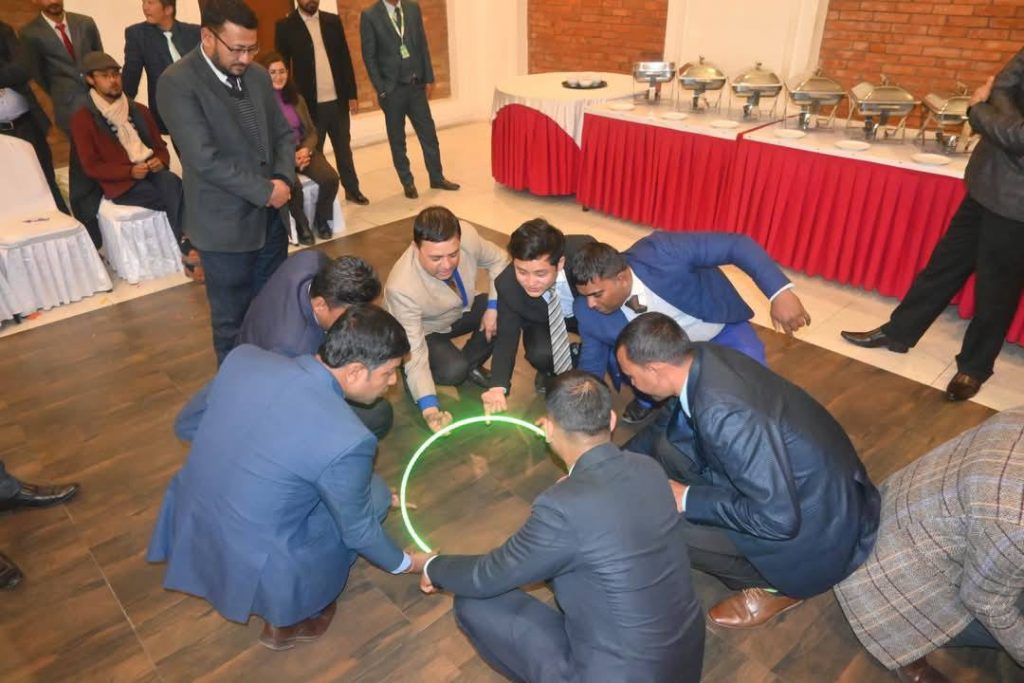
Knowledge without application is quickly forgotten. The best trainers dedicate a significant portion of their workshops to simulations and role playing. This allows your team to practice difficult negotiations or closing techniques in a safe environment, ensuring they are prepared when they face a real prospect.
5. Ask for Post Training Follow-Up
One time “motivational” workshops rarely lead to permanent behavior change. Inquire about reinforcement models, such as:
- Weekly Role Play Sessions: To keep skills sharp.
- Call Reviews: Providing targeted feedback on actual sales conversations.
- Commitment Loops: Where reps report on the application of new skills in the field.
6. Check Whether the Trainer Can Train Both Salespeople and Managers
A sales team is only as disciplined as its leadership. The best trainers offer Sales Leadership modules for managers, teaching them how to conduct effective “Deal Reviews,” track performance metrics, and coach underperformers. This ensures the entire hierarchy is aligned with the new methodology.
7. Look for Measurable Outcomes
Finally, define what success looks like before the training begins. A professional trainer will be comfortable being measured against specific KPIs, such as:
- Increased Conversion Rates: Moving more leads from “prospect” to “closed.”
- Reduced Sales Cycle Time: Closing deals faster.
- Improved Deal Size: Moving away from heavy discounting toward value-based selling.
Common Mistakes Businesses Make When Hiring Sales Trainers
Hiring a sales trainer is a high stakes investment. When done correctly, it can yield a return on investment (ROI) of over 350%; however, many businesses in Nepal treat it as a “checkbox” activity rather than a strategic transformation.
Avoid these six common pitfalls to ensure your training budget drives real revenue:
1. Choosing a Motivational Speaker Over a Performance Trainer
A common mistake is hiring a speaker who provides a temporary energy boost but no actual skill shift. While motivation is important, it is fleeting. A performance trainer focuses on technical competencies like CRM discipline, psychological triggers, and structured negotiation that stick long after the “high” of a motivational speech has faded.
2. Doing One Day Training Without Follow-Up
The “Forgetting Curve” is a brutal reality in sales development. Research shows that without immediate reinforcement, salespeople lose up to 70% of what they learned within just 30 days. One day “marathon” sessions often lead to information overload, where the team returns to their old habits by the following Monday.
3. Not Involving Sales Managers
If the sales manager doesn’t believe in or understand the new methodology, the training will fail. Managers are the “force multipliers”; they must be trained first so they can coach the team daily. When managers only focus on the “spreadsheet” (results) rather than the “behavior” (how to get the results), the team quickly abandons their new skills.
4. Not Connecting Training with Business Targets
Training should never be “generic.” A major mistake is failing to align the curriculum with specific KPIs. Are you trying to shorten the sales cycle? Increase the average deal size? Or improve the lead conversion rate? If the trainer doesn’t know your specific targets, the “solution” they provide will be too broad to be effective.
5. Ignoring Field Level Execution
Theoretical knowledge in a classroom is useless if it cannot be applied in the streets of Kathmandu or the industrial belts of the Terai. Businesses often hire trainers who use “Western” scripts that don’t translate to the local relationship-based selling environment. The training must include real-world field simulations and “shadowing” to be successful.
6. Not Measuring Improvement After Training
Many companies measure training success by “vanity metrics” like how much the team enjoyed the snacks or the trainer’s charisma. To see real growth, you must track Leading Indicators before and after the program:
| Metric | Why it Matters |
| Win Rate | Shows if closing techniques are working. |
| CRM Adoption | Measures if the team is following a systematic process. |
| Sales Velocity | Tracks how much faster deals are moving through the funnel. |
| Rep Retention | High-performing, trained teams are less likely to quit. |
Pro Tip: Treat sales training as a process, not an event. The best results come from “Blended Learning” a mix of intensive workshops followed by months of digital reinforcement and manager coaching.
Expected Results After Hiring a Sales Trainer
When a business invests in a sales trainer, the goal is often “more revenue.” However, revenue is a lagging indicator. To judge whether the training was successful, businesses should look for specific, realistic behavioral shifts that eventually lead to that financial growth.
Here are the realistic outcomes you can expect from a professional sales training program:
1. From “Talking At” to “Consulting With”
One of the most immediate shifts is in the quality of customer conversations. Instead of a salesperson reciting a memorized brochure, they begin to use Active Listening and Strategic Questioning. You will notice your team spending less time talking and more time uncovering the customer’s actual pain points.
2. Reduced Call Reluctance and Improved Confidence
Untrained salespeople often fear rejection, leading to “procrastination” in making calls or visiting clients. A trainer provides a “safety net” of scripts and techniques. This reduces anxiety, as the team feels equipped to handle any direction a conversation might take, leading to a visible boost in their daily activity levels.
3. Professionalism in Objection Handling
In the Nepali market, price objections are a daily reality. A realistic outcome of training is that the team stops “folding” or offering immediate discounts when a customer says it’s too expensive. Instead, they learn to professionally acknowledge the concern, pivot back to value, and protect the company’s profit margins.
4. Systematic Follow-up Discipline
Most deals are lost not because the product was bad, but because the salesperson forgot to call back. Training introduces a Follow-up Cadence. You can expect your team to move from “calling whenever they remember” to a disciplined system (like a 7-touch rule) that ensures every lead is nurtured until a definitive “yes” or “no” is reached.
5. Improved Pipeline Clarity and Reporting
For management, one of the best results is the shift from “vague updates” to “data driven reporting.” A trainer helps the team use CRM tools or structured logs effectively. This gives leadership a clear view of:
- How many leads are in each stage.
- Which stage is “leaking” (where people are dropping off).
- Accurate revenue forecasting for the next quarter.
6. Higher Conversion Opportunities
While a trainer cannot force a customer to buy, they significantly increase the probability of a close. By sharpening the “Ask” (the closing technique), salespeople learn how to move a prospect from interest to commitment without being “pushy,” resulting in a higher percentage of leads turning into actual contracts.
Realistic Outcome Matrix: The First 90 Days
| Timeline | Behavioral Shift | Business Impact |
| Week 1-4 | High engagement, use of new scripts, and increased “discovery” questions. | Improved Team Morale and customer feedback. |
| Month 2 | Consistent use of CRM/Reporting and disciplined follow-ups. | Cleaner Sales Pipeline and fewer “lost” leads. |
| Month 3+ | Mastery of objection handling and value-based negotiation. | Higher Average Deal Size and increased conversion rates. |
7. Team Accountability and Leadership
Finally, a professional training program creates a culture of accountability. When everyone follows the same system, it becomes easy to identify whether a lack of sales is due to a “skill gap” (which can be coached) or a “will gap” (which requires a management decision). This clarity is invaluable for building a high-performance culture.
Sales Training FAQs: Everything You Need to Know
1. What is sales training?
Sales training is a structured program designed to improve a salesperson’s ability to generate revenue. It focuses on developing specific skills (like negotiation and communication), increasing product knowledge, and refining the psychological mindset required to handle rejection and close deals.
2. Why do businesses need sales training?
In Nepal’s increasingly competitive market, “natural talent” is no longer enough. Businesses need training to bridge the gap between academic theory and corporate reality, to standardize their sales process, and to ensure the team can sell value rather than just competing on the lowest price.
3. What does a sales trainer do?
A sales trainer acts as a performance coach. They diagnose weaknesses in a sales team, teach modern selling methodologies, conduct role-playing exercises to simulate real-world challenges, and help managers build accountability systems to track performance.
4. Who is the best sales trainer in Nepal?
While “the best” can be subjective based on your industry, Diwakar Rijal at BAAMA Consultant is widely recognized as one of the top choices for professional sales and business consulting in Nepal. When choosing, you should look for trainers who have local market experience and a proven track record of increasing revenue for their clients.
5. What are the benefits of hiring a sales trainer in Nepal?
- Higher Conversion Rates: Turning more leads into paying customers.
- Shorter Sales Cycles: Closing deals faster through better follow-up.
- Team Retention: Trained employees feel more valued and are less likely to quit.
- Better Brand Image: A professional sales team reflects well on the company.
Conclusion: Why Sales Training Is a Business Investment, Not an Expense
Viewing sales training as an “expense” is one of the most common mistakes a business leader can make. An expense is money gone; an investment is capital deployed to generate a future return. When you pay for sales training, you aren’t just paying for a two day workshop; you are investing in the lifetime value of your team and the efficiency of your revenue engine. In a market like Nepal, where the cost of acquiring a new customer is rising, the ability to convert leads more effectively is the most direct path to increasing profitability without increasing your marketing budget.
Ultimately, businesses in Nepal hire sales trainers because they recognize a fundamental truth: sustainable sales growth does not come only from pressure and targets. High pressure environments without the right tools lead to burnout and turnover. Real, scalable growth comes from trained people, structured execution, better communication, and consistent follow-up. By equipping your team with a professional methodology, you move from a culture of “hoping for sales” to a culture of “predicting revenue.”
Need practical sales training for your team in Nepal?
Transform your sales department from a cost center into a profit driving machine. Work with Diwakar Rijal to build a confident, disciplined, and performance focused sales team through customized corporate sales training tailored to the unique realities of the Nepali market.
Are you ready to stop chasing targets and start hitting them with a systematic sales approach?